Smells Like Home
A father’s memory of home, and the inherited memory of those who left it.
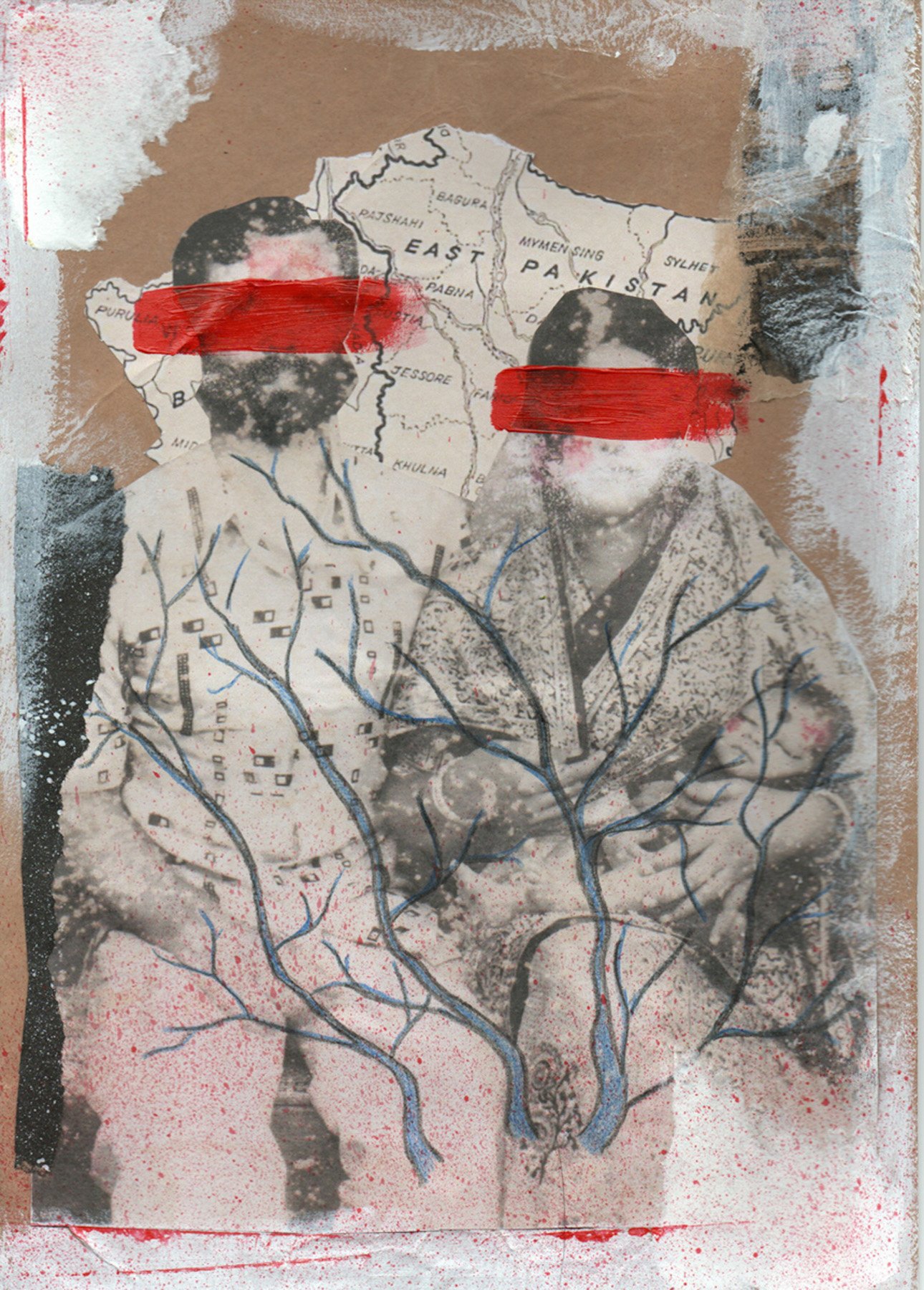
There is a fish in this story that means too much for any photograph to hold.
In Dhaka, before 1947, Mrs. Gayatri Das Sharma grew up in a doctor’s household that ate well. Fish and rice were the Bengali staple, and her family’s portion of it was never in question. A whole fish, brought home from the river or the market, large enough for ten or fifteen people. She grew up watching that abundance arrive, unremarkable, every day.
Then the family migrated to India, into a single rented room. One day, not long after, her father came home from the local market carrying half a fish. That was the moment, Shubhadeep Mukherjee says, that partition became visible to her, at nine. Not through violence or headlines, but through the size of what her father could afford to bring home. “It’s not about the fish,” Mukherjee says. “It’s about what the fish represents. It’s freedom. It’s accessibility. It’s your dignity also.”
Mrs. Das Sharma is in her late eighties now. She still remembers exactly how she felt that day.
Smells Like Home began, in mid-2021, with a much smaller fish — a single conversation, recorded almost by accident. Mukherjee’s father, Dilip Mukherjee, had started talking about his childhood in Barishal, in what was then East Pakistan, and Mukherjee began recording it on his phone. His father had been four and a half years old at the time of Partition, and what came out was less a chronology than a scent trail: the violence and the loss surfaced only in passing, and what lingered, what his father kept circling back to, was the texture of a home he could no longer reach. Good food, a particular smell, a feeling that Mukherjee describes as not quite nostalgia, because nostalgia implies looking back fondly on something finished. This felt closer to something still happening.
“It’s not structured,” he says of how these memories surface. “It’s here and there... pulling you back and forth. Pushing and pulling. It’s kind of breathing.”
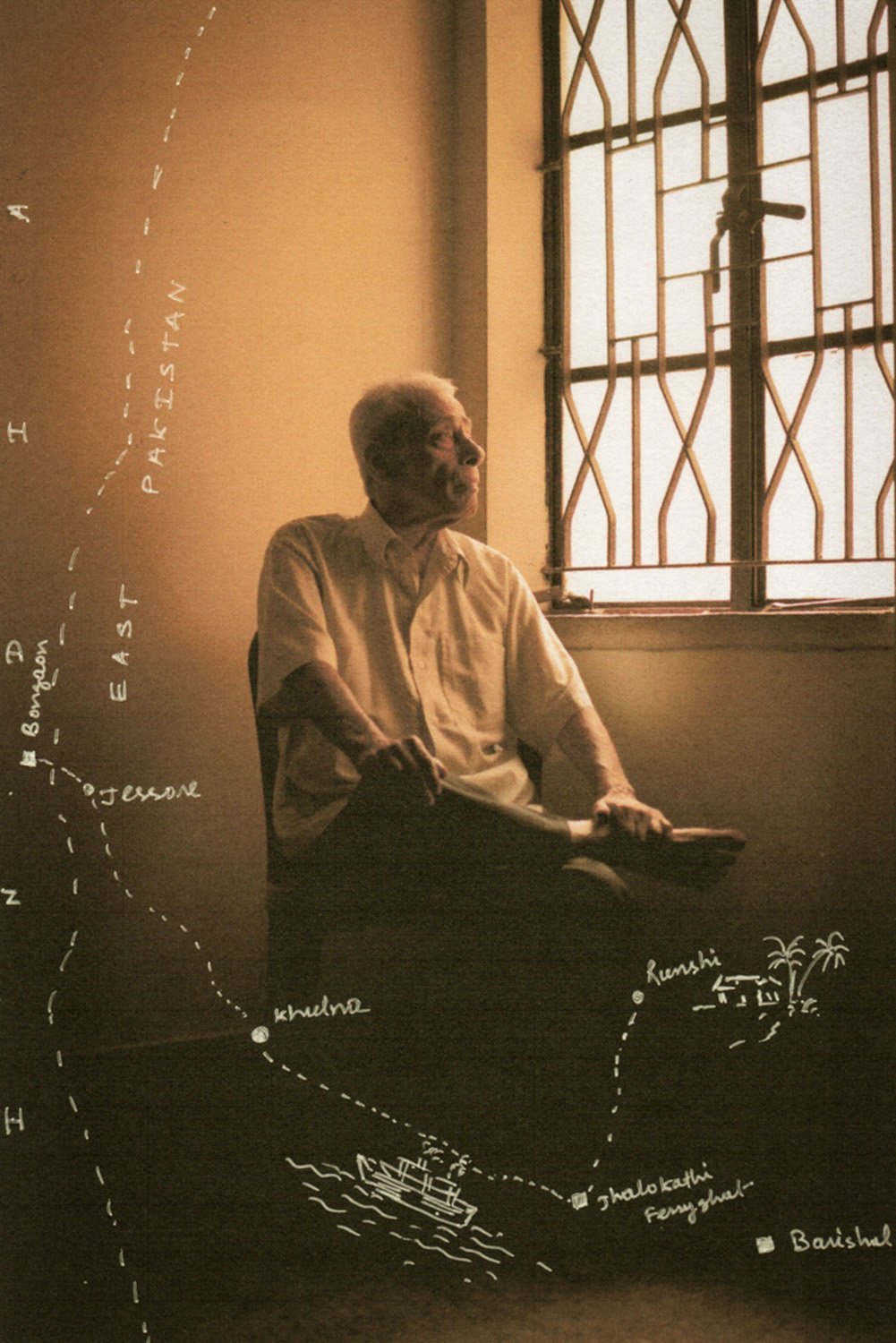
Two nations were made official in the space of a signature — one green passport exchanged for a red one, the crossed flags of a country that would itself split apart within a generation. The passports belonged to Mukherjee’s great-grandfather, Sarat Chandra Mukhopadhyay, and his family kept them all the same — proof, on paper, of an identity that took years to feel true. What the document didn’t record was everything that followed: work lost, schooling interrupted, a family treated as suspect for having no papers the new country recognized. His father keeps them still, he says, because they keep him rooted to a reality that was once there.
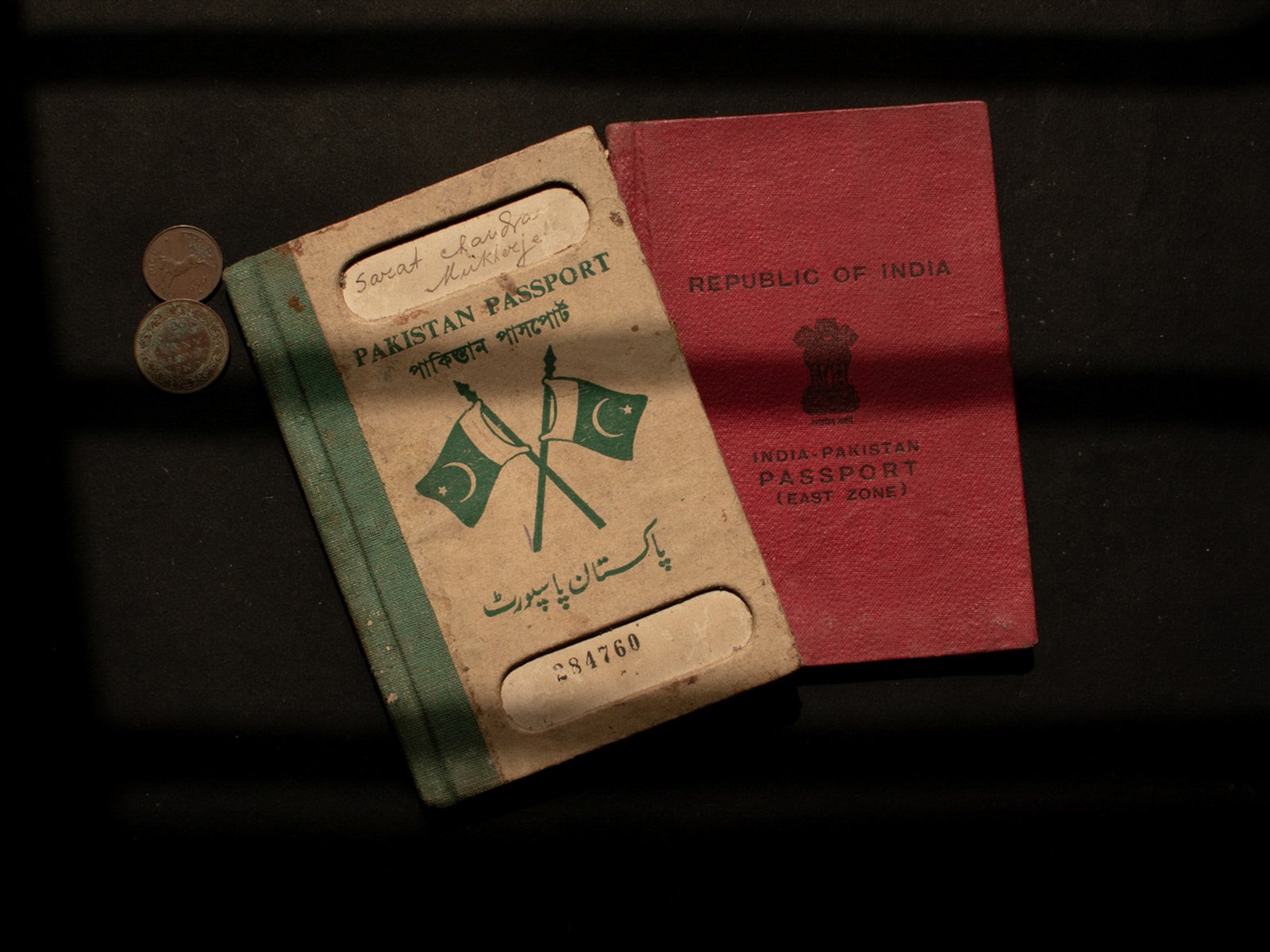
The family lost their belongings on the way, and reached India with very little to sustain them. A household that had once lived comfortably now had to begin again from almost nothing.
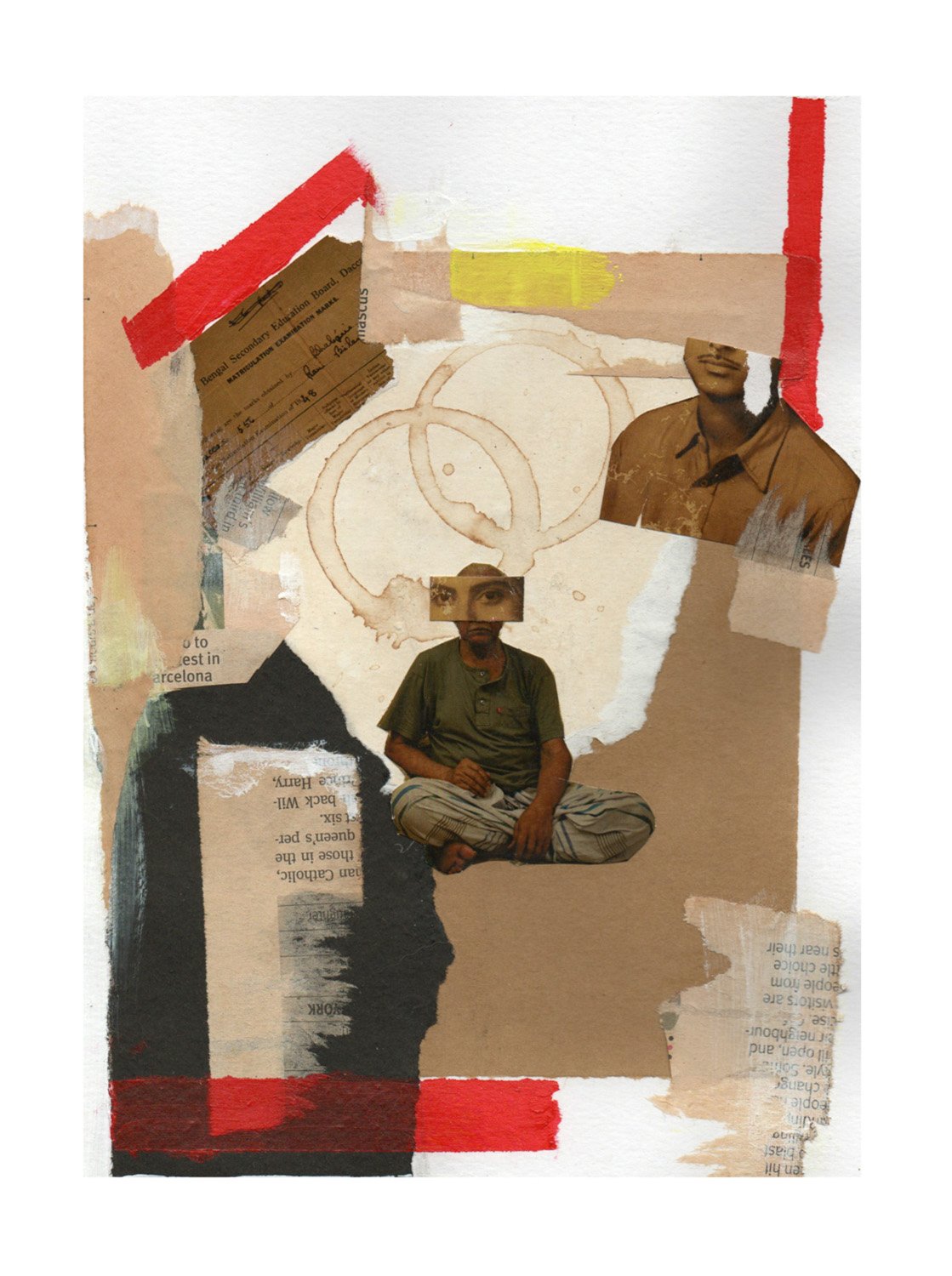
His father does not speak of this period often, and when he does, it surfaces the way the rest of his memory does — not in sequence, but in fragments that return unbidden. Even now, in his eighties, he lives with insomnia.
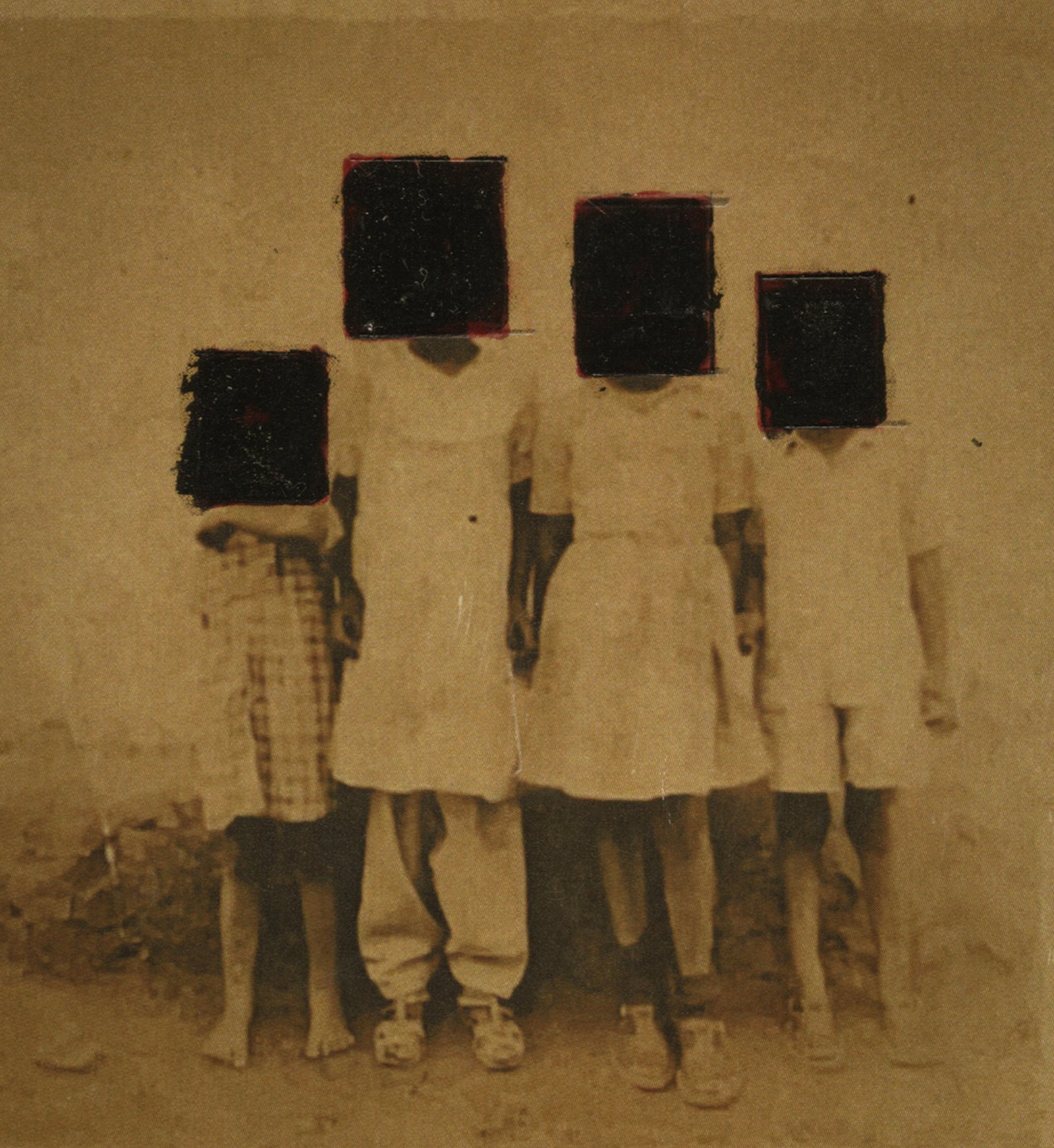
Among the family’s old photographs is one Mukherjee’s father can no longer place — faces he doesn’t recognize, people he has no memory of, kept all the same in an old trunk he still returns to. Mukherjee has obscured their faces in the print: not as a statement, but because that is, literally, what has happened to them. They are photographs of people his father has lost twice — once to Partition, and again to memory itself.
That description — memory as something that breathes rather than something that’s filed — became the shape of the project itself. From his father, Mukherjee began reaching out to others who carried the same kind of memory: his father’s childhood friends, his friends’ grandparents, relatives on his mother’s side, and eventually strangers, found through a chain of introductions that widened slowly, one trusted name passed to the next. He calls the people in this project his collaborators — not subjects, not interviewees. The distinction matters to him, and it shows in how the work was made: repeated visits, years of quiet presence, conversations that wandered nowhere near the project before they wandered somewhere close to its center.
One of those collaborators, Mrs. Jaya Chandra, remembers a jamun tree near her childhood home in Khulna — the favorite spot for her and her friends every evening, the fruit smashed into their frocks as they carried it home to make into something to share. She still smiles telling it. “After we reached here,” she says, “I felt that my voice had been muted.”
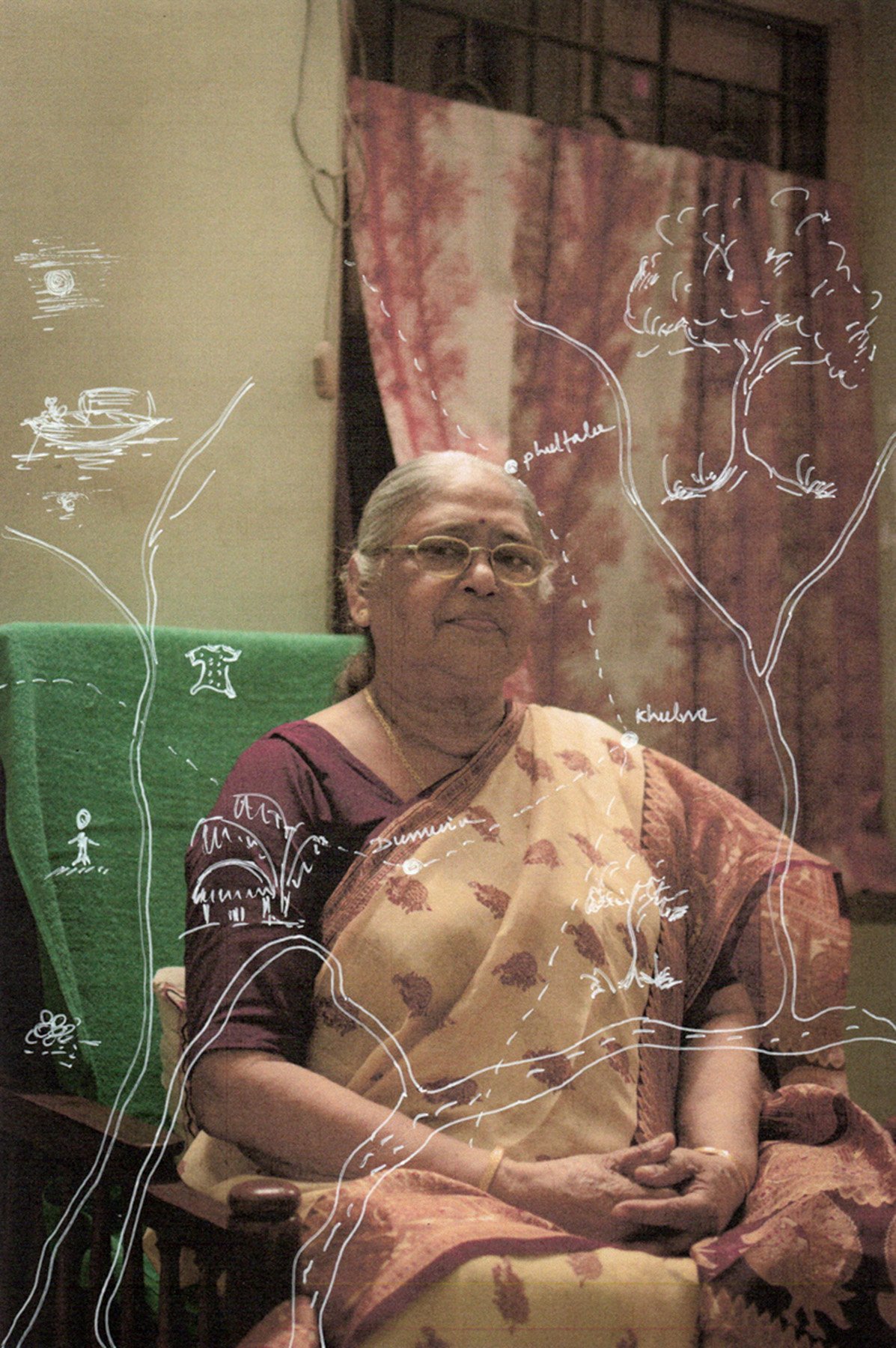
Not everyone’s memory arrived in the same register. Mukherjee is careful about this. The people he has spoken with span a wide range of ages at the moment of migration — some were toddlers, some were teenagers travelling alone, some were already adults with households of their own — and the difference shows in how the memories hold together. His father’s recollections are fragmented, faded at the edges. Others are startlingly intact.
One of his collaborators left Dhaka alone at fourteen or fifteen, sent ahead by parents who believed the separation from their home was temporary — a matter of finding a good school, nothing more. He remembers the journey in exact, physical detail: boarding a steamer just after sitting his matriculation exam, a night spent travelling, the smell of chicken curry being cooked by the crew — food his Brahmin family would never have eaten at home, and food he was hungry enough, alone, to consider anyway.
Another collaborator, who left Khulna by boat at nine, remembers her grandmother standing on the riverbank as they left. A third gave away her toys to a neighbor’s child before her family departed, telling the child to keep them safe: I’ll come back for them. Many of Mukherjee’s collaborators describe being told, at the time, that they were only going on a visit — to in-laws, to relatives — and would return within days. Few said proper goodbyes. Almost none of them went back.
Mukherjee is not trying to reconcile these different registers of memory into one uniform account. He is more interested in what stays constant underneath them: the shape of a childhood interrupted, wherever and whenever it happened, and the particular, specific objects — a fish, a smell, a handful of soil — through which the interruption gets remembered, because loss on this scale is otherwise too large to hold onto.
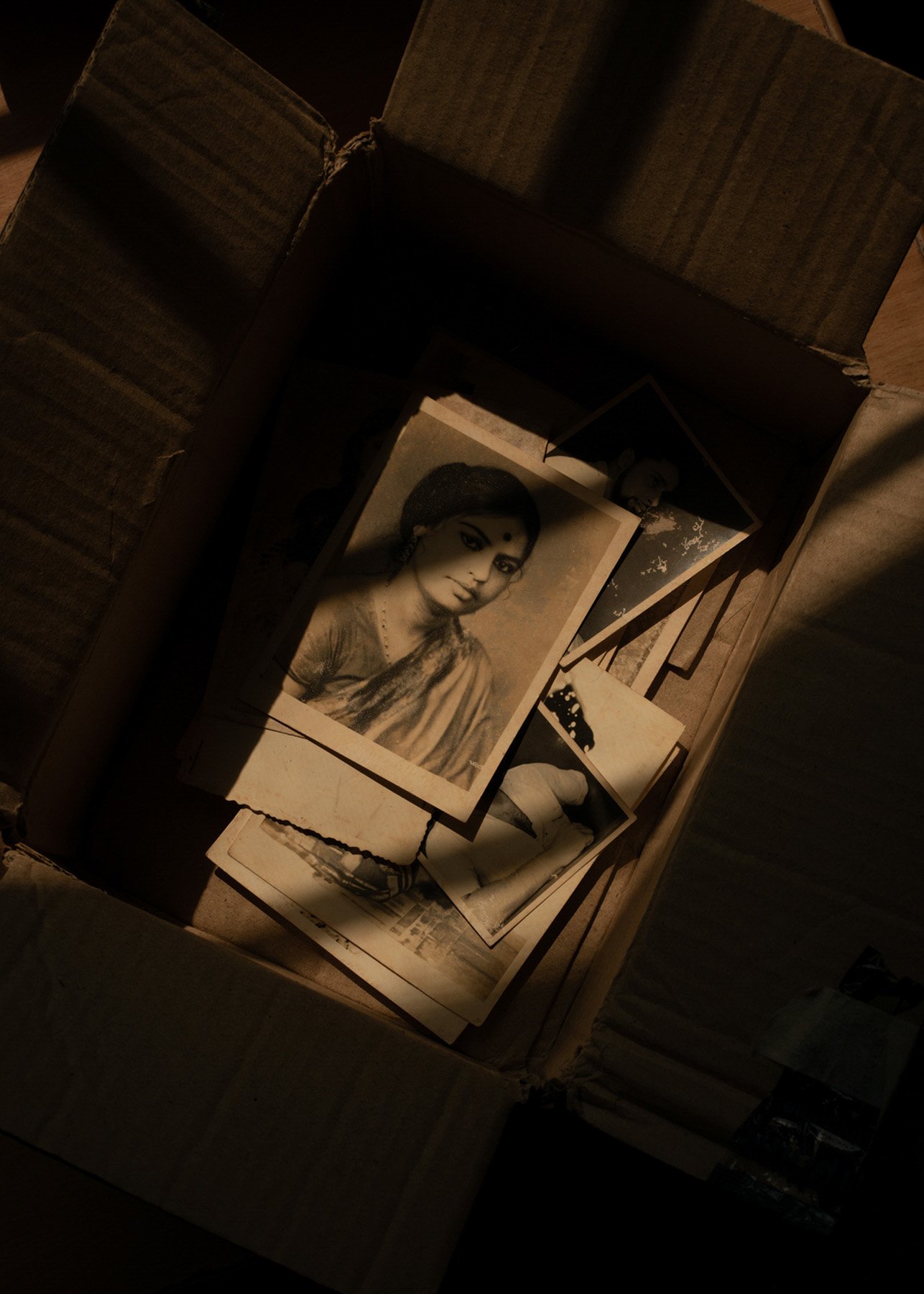
What his collaborators eventually shared with him was rarely offered on a first visit. A photograph. A document.
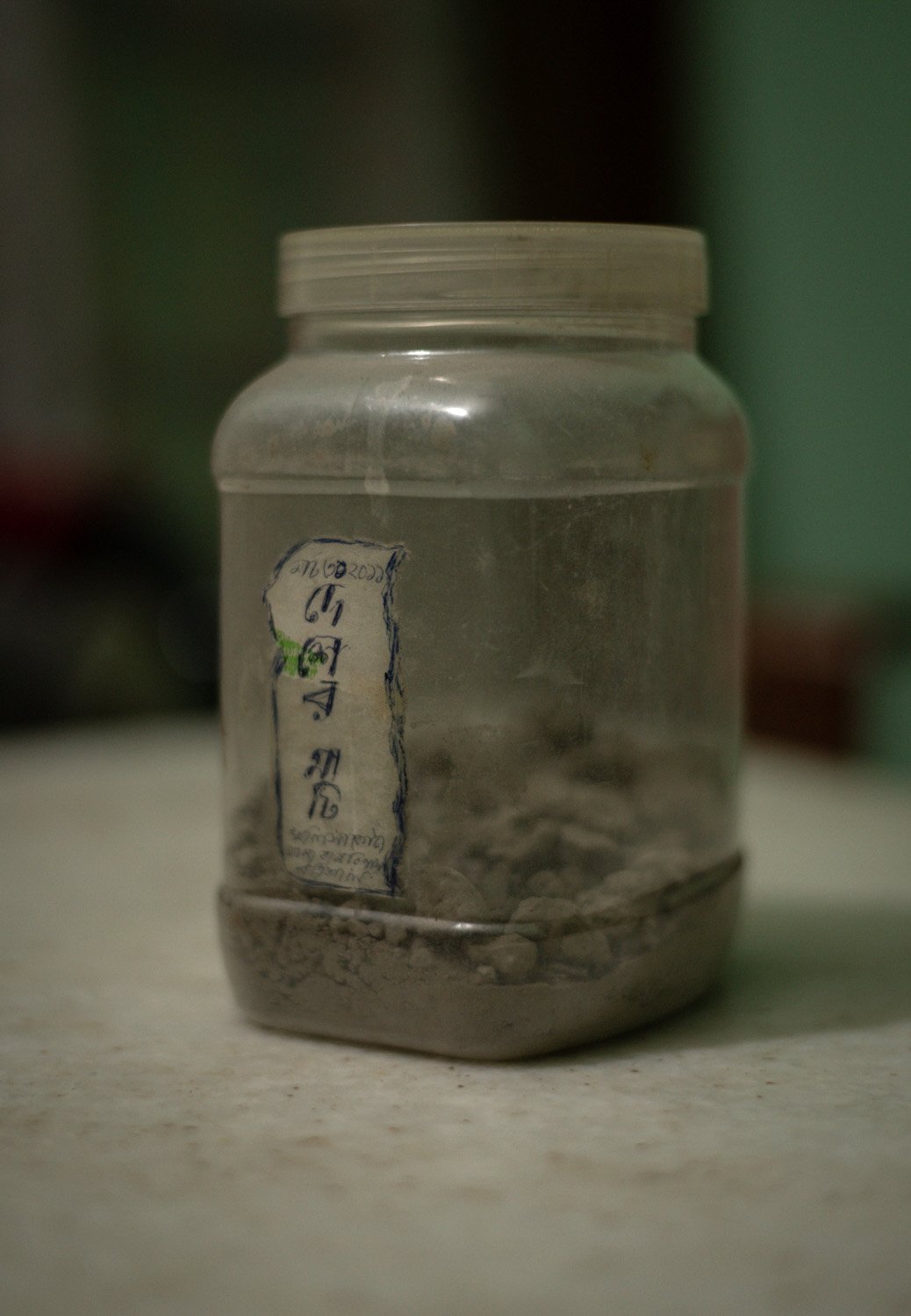
In one case, a plastic jar of soil, brought back from a visit to the village of Banoripara, in Barisal district, in 2017, and kept on a shelf since — labeled desher maati, soil from the homeland.
The photographs, in this light, are not illustrations of a historical event. They are attempts to give shape to something that resists being photographed directly — memory that exists now only as feeling, told secondhand, sometimes thirdhand, passed from a grandfather who has since died, through a father, to a son who never set foot in the place being described. Mukherjee calls this “inherited memory.”
It is why the photograph alone was never going to be enough. One collaborator, in Hyderabad, remembers his own father writing letters for years, seeking word of the family house his grandfather had built. No response ever came. It was only after his father’s death that he found the letters — stacked, unsent, under the mattress. He had never been able to bring himself to post them.
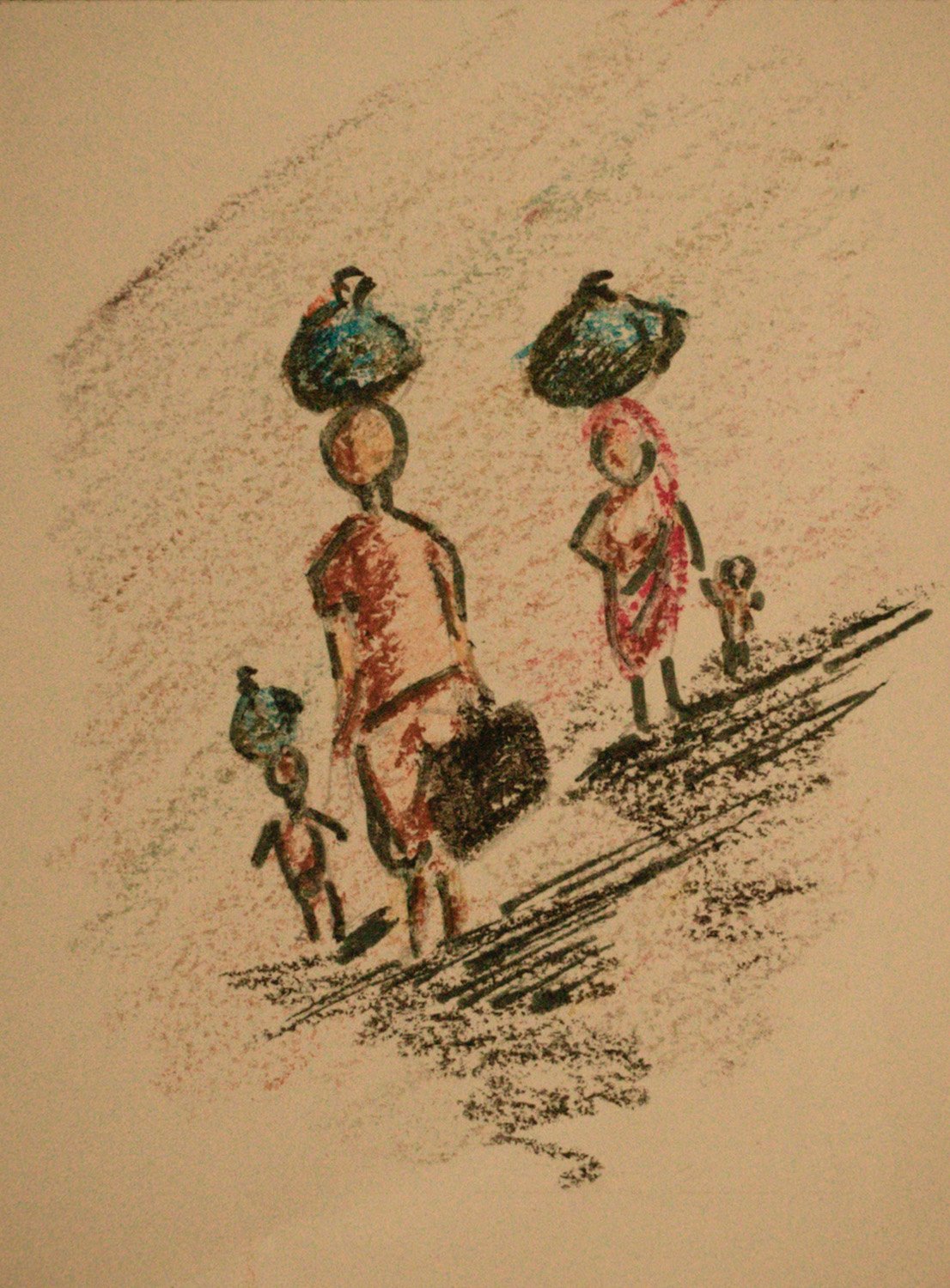
Smells Like Home is yet to reach its final stage. Mukherjee continues to add new collaborators to the project. He wishes to visit his father’s ancestral village in Bangladesh, someday.
Mukherjee grew up hearing the word udbastu — the displaced — used for people like his own family. “I wonder,” he says, “if my idea of home is defined by a barbed wire.”
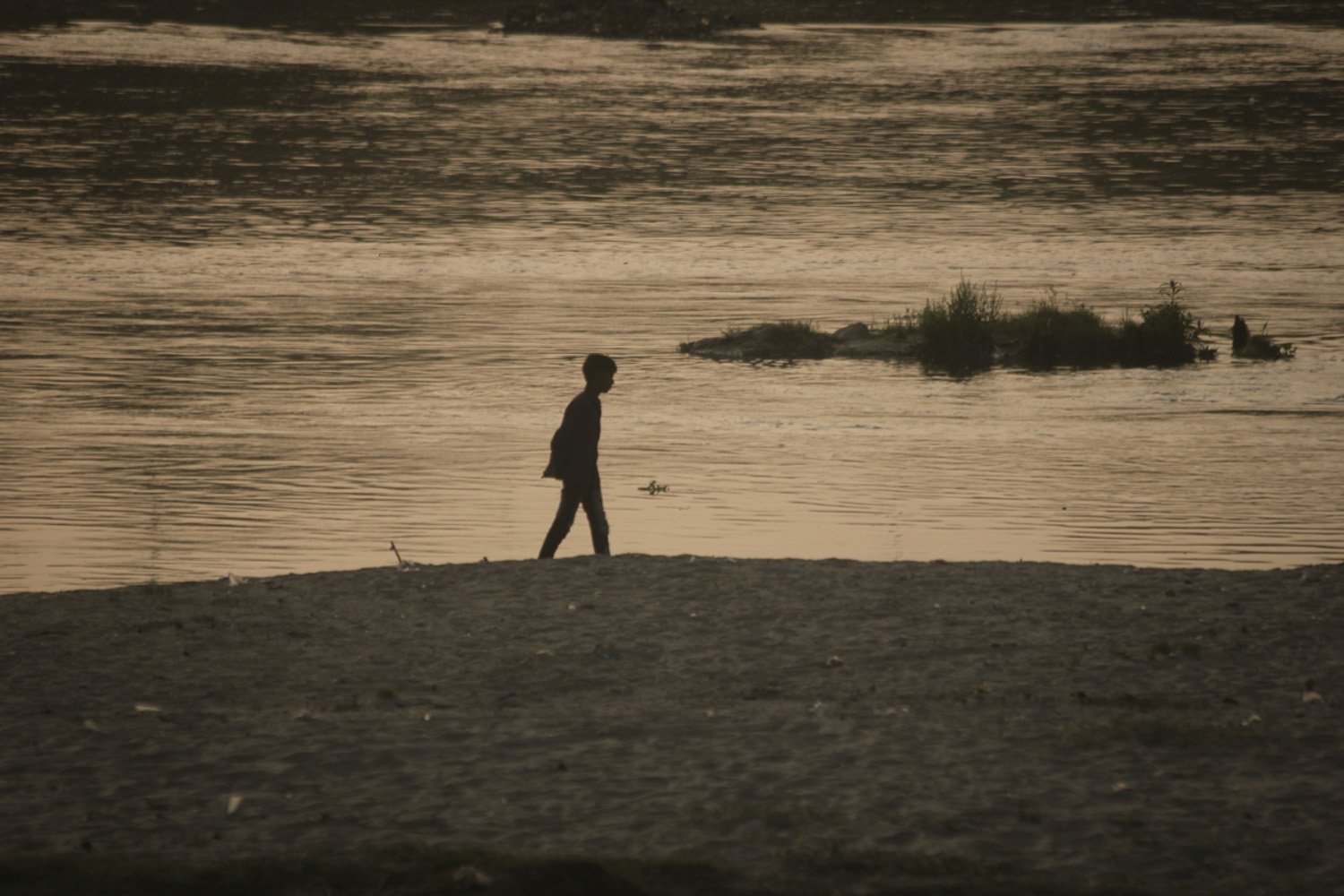
If you carry a story of migration from Bengal — your own, or one entrusted to you by a parent or a grandparent — Shubhadeep would like to hear it. Write to us at editor@betweenstill.com with the subject line “Smells Like Home — Collaborator,” and we will pass it along.
Leave a reflection
What stayed with you after reading? We welcome thoughtful, respectful responses.
Write to us at: editor@betweenstill.com