Witness
Three Generations, Small Rituals
Some families tell their story through milestones. Mine has always revealed itself through smaller repetitions—habits practiced until they become a language. A braid tightened gently. A bowl set at a window. A weekly call that turns a room into a bridge. An “innocent face” made on request at a dinner table, passed down like a nickname.
I’ve been photographing my family for more than 20 years. Not to preserve what time will take, but to pay attention while it’s here. The photographer in the family is also a son, a brother, an uncle—inside the frame even when he isn’t visible.
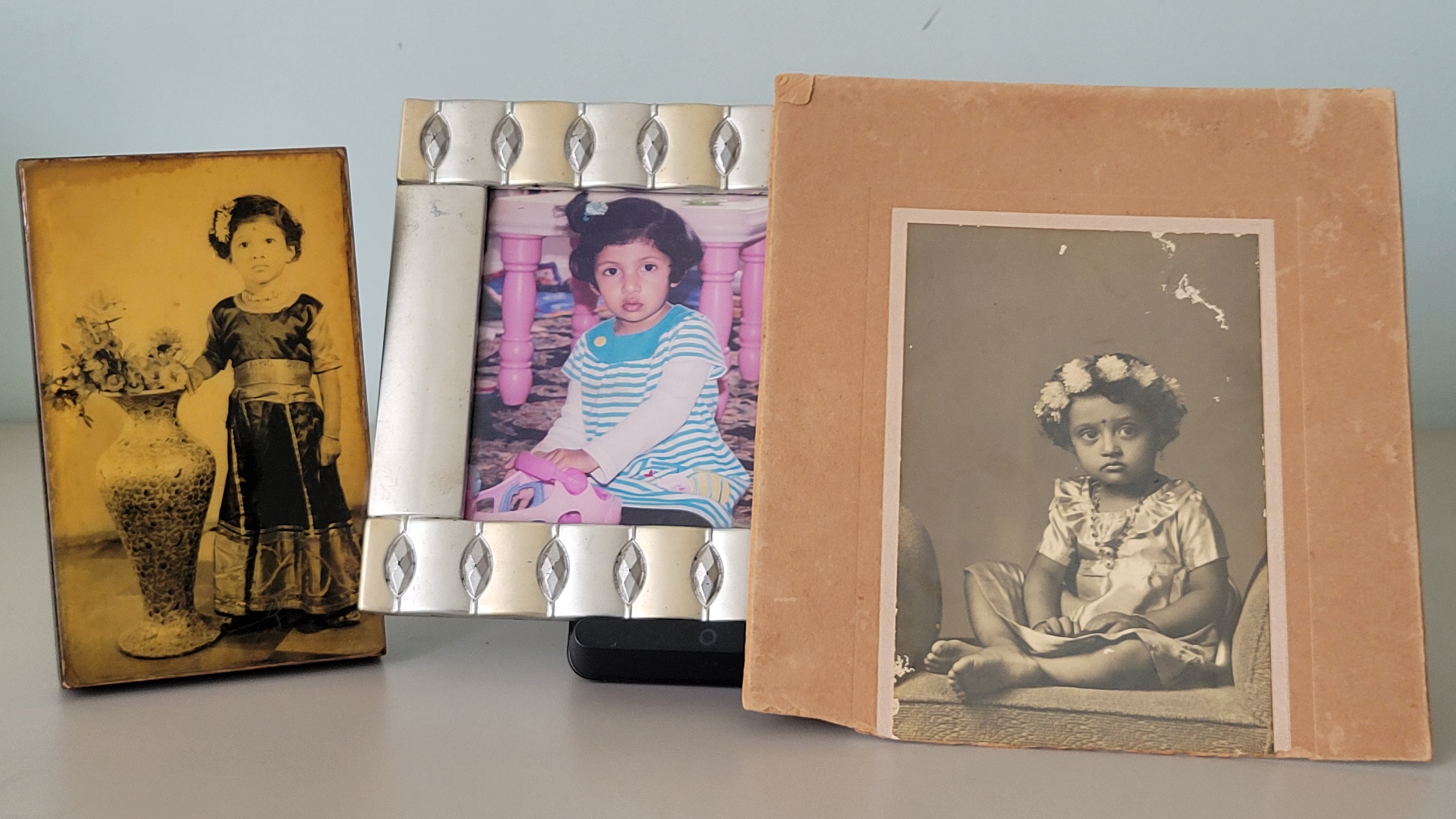
Sharda (1952) / Ajay (1978) / Kriti (2011)
1952 / 1978 / 2011 — My mother as a child. My brother dressed in a frock. His daughter decades later. A family dream, returning in unexpected forms.
At first, I thought family photographs were mostly about resemblance. Now I think they’re about something quieter: how tenderness travels—through gestures, through jokes, through what we keep.
The Witness Inside the Family
Being the witness inside your own family means holding two truths at once: what is happening, and what it will become. You know the backstory; you know what happened after. You know what the smile cost. You notice what people tuck into corners. You watch ordinary days stack up into history.
In my family, reading became one way attention was practiced and passed on—not from Sharda or Ajay, but through Amitha, Kriti’s mother, who made books feel like part of the household air. It looks simple until you realize what it is teaching: family values transmitted quietly, page by page.
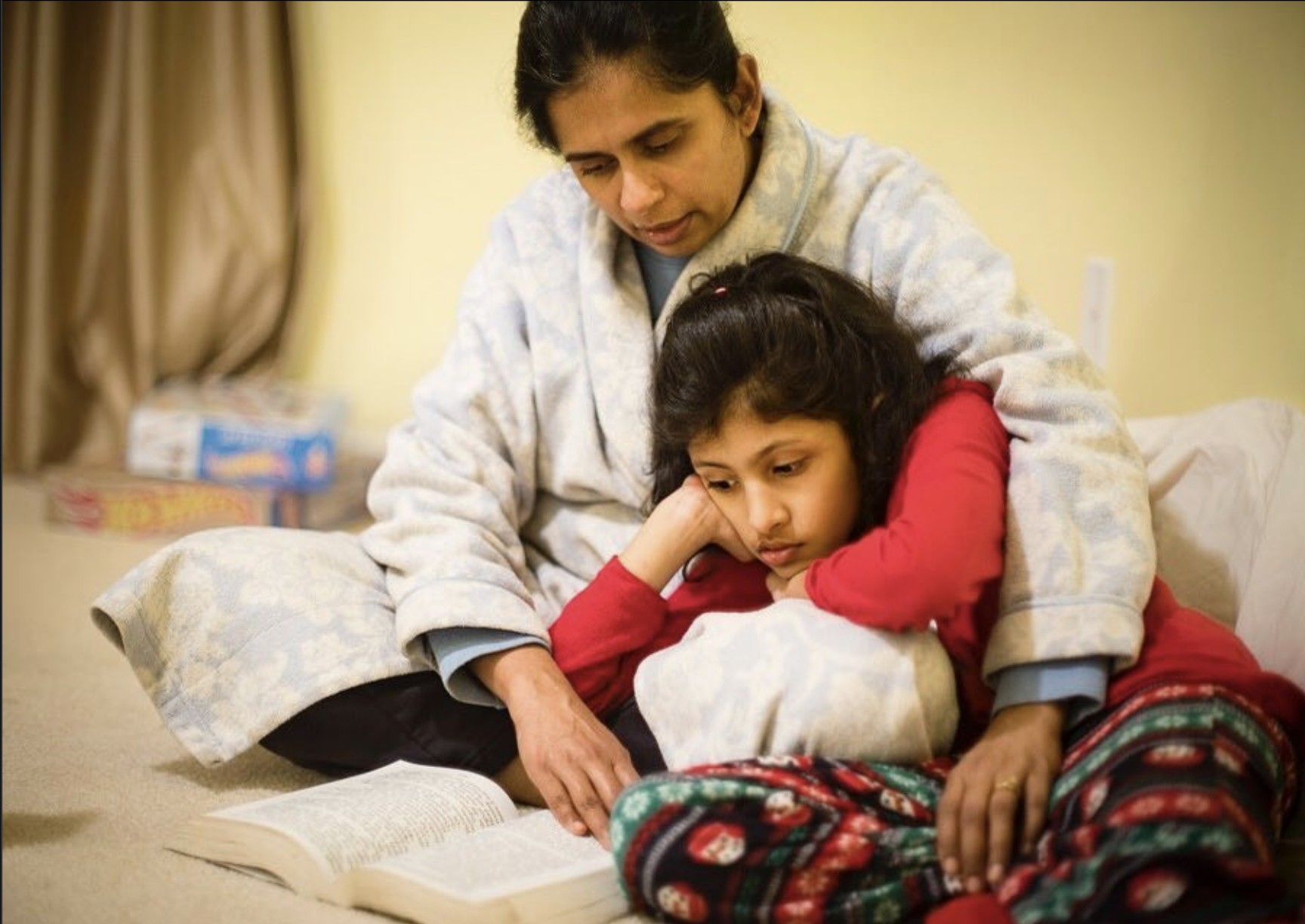
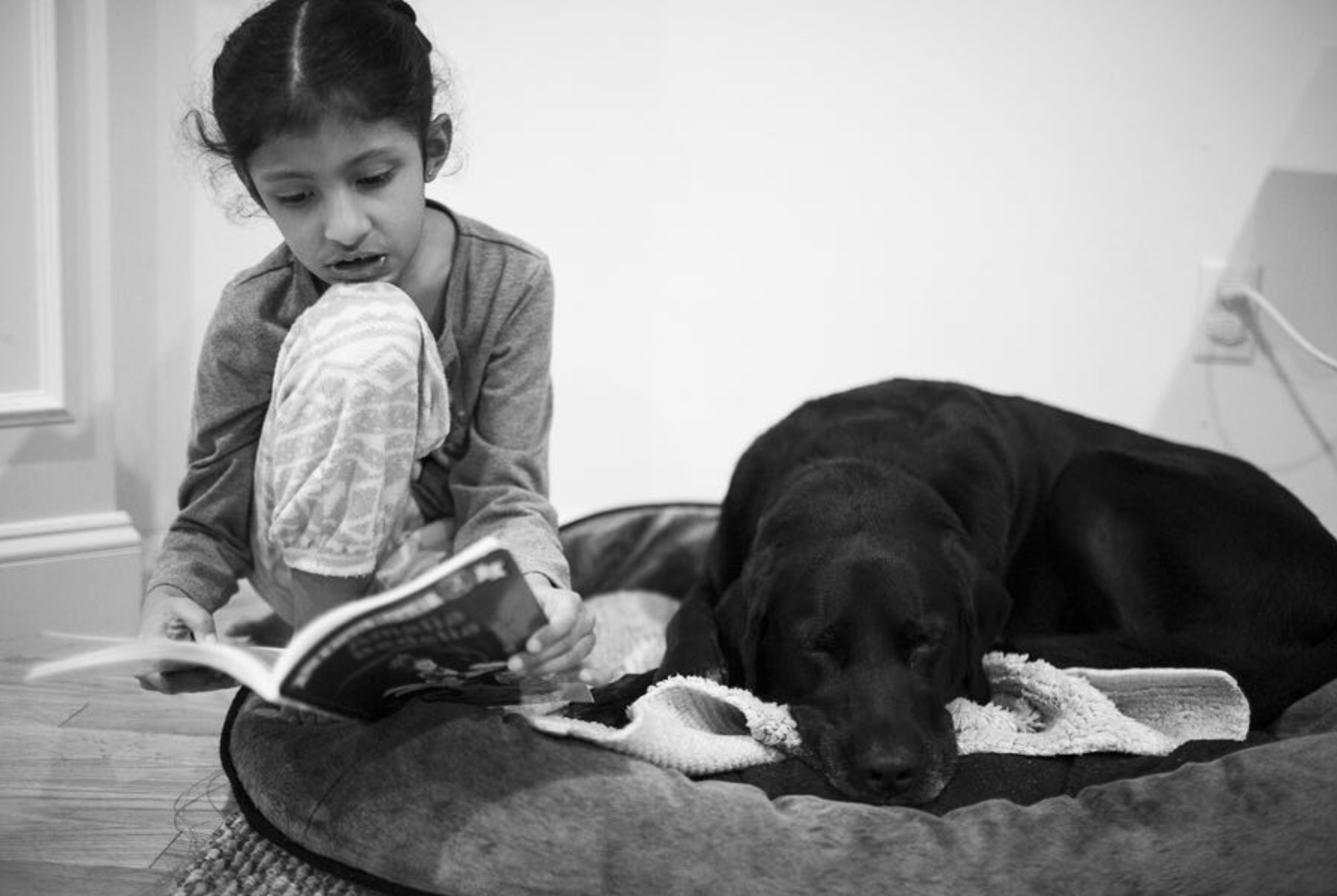
Windows and Parallel Lives
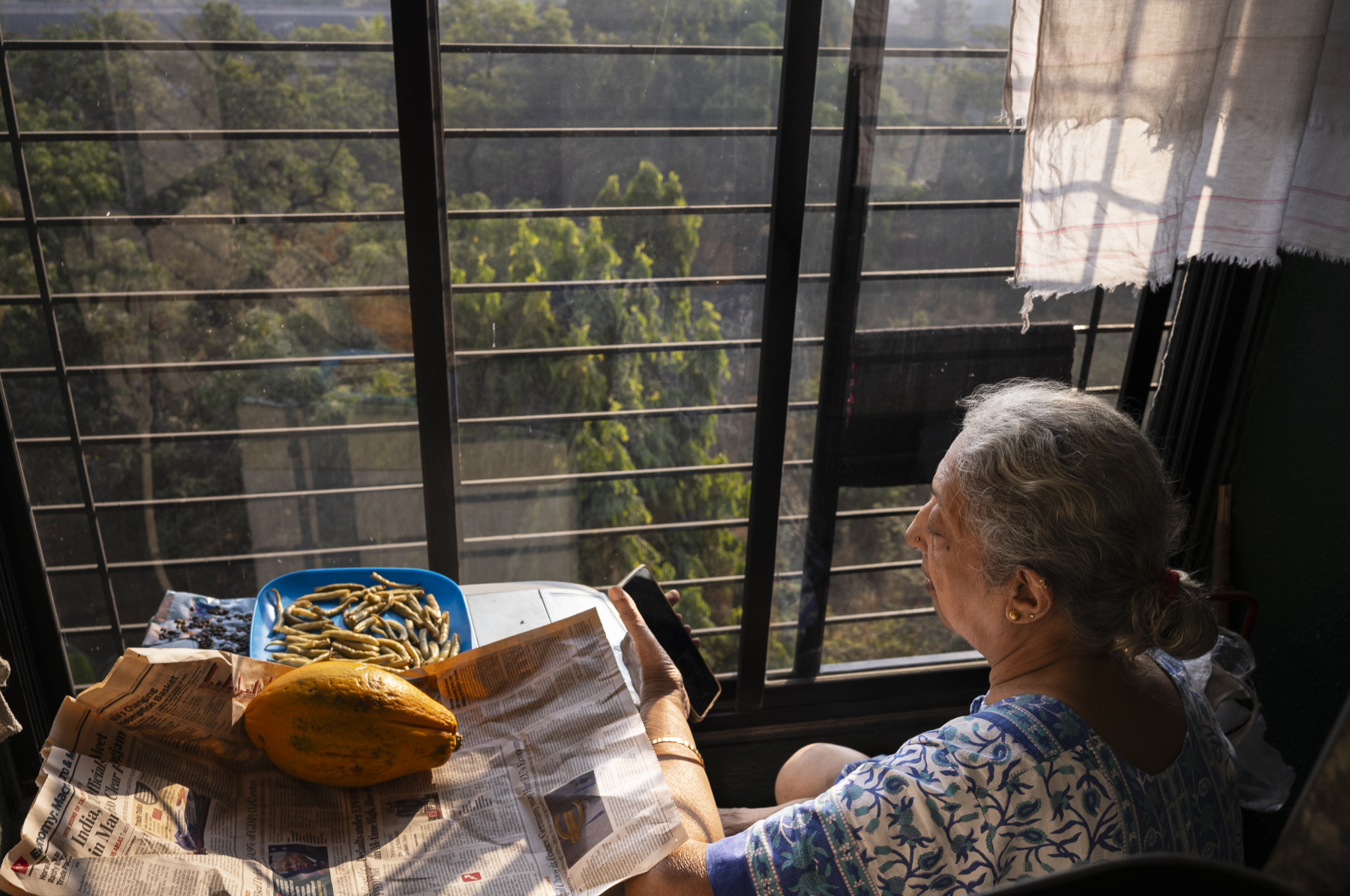
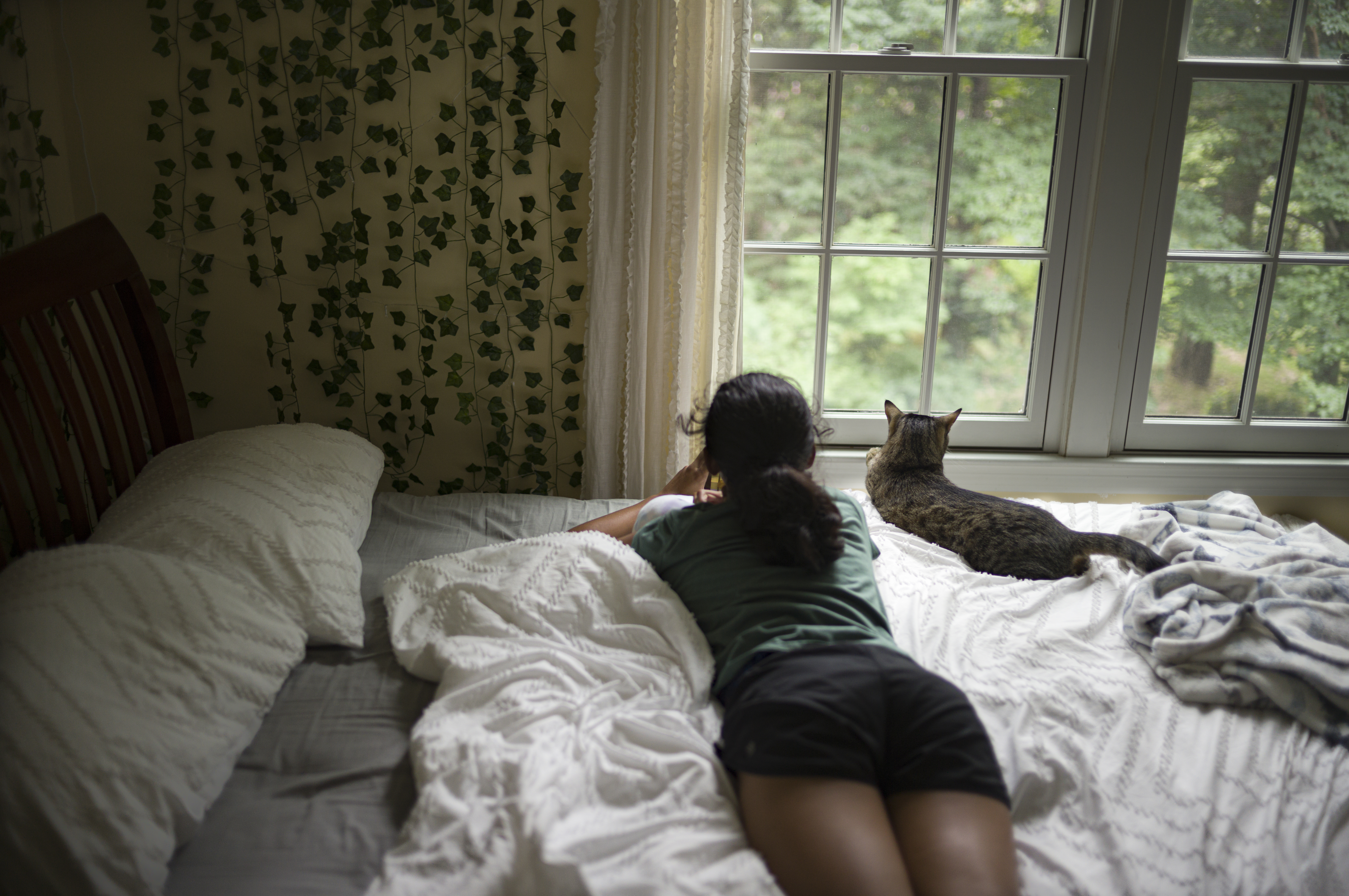
Distance changes a family’s shape, but it doesn’t have to break connection. Sometimes it forces tenderness to find new routes. In Mumbai, Sharda sits in morning light and reads the news on her phone. In Boston, Kriti lies on her bed on a call with a friend, her cat Mick at the window beside her. Windows into their world—the living texture of a family spread across oceans.
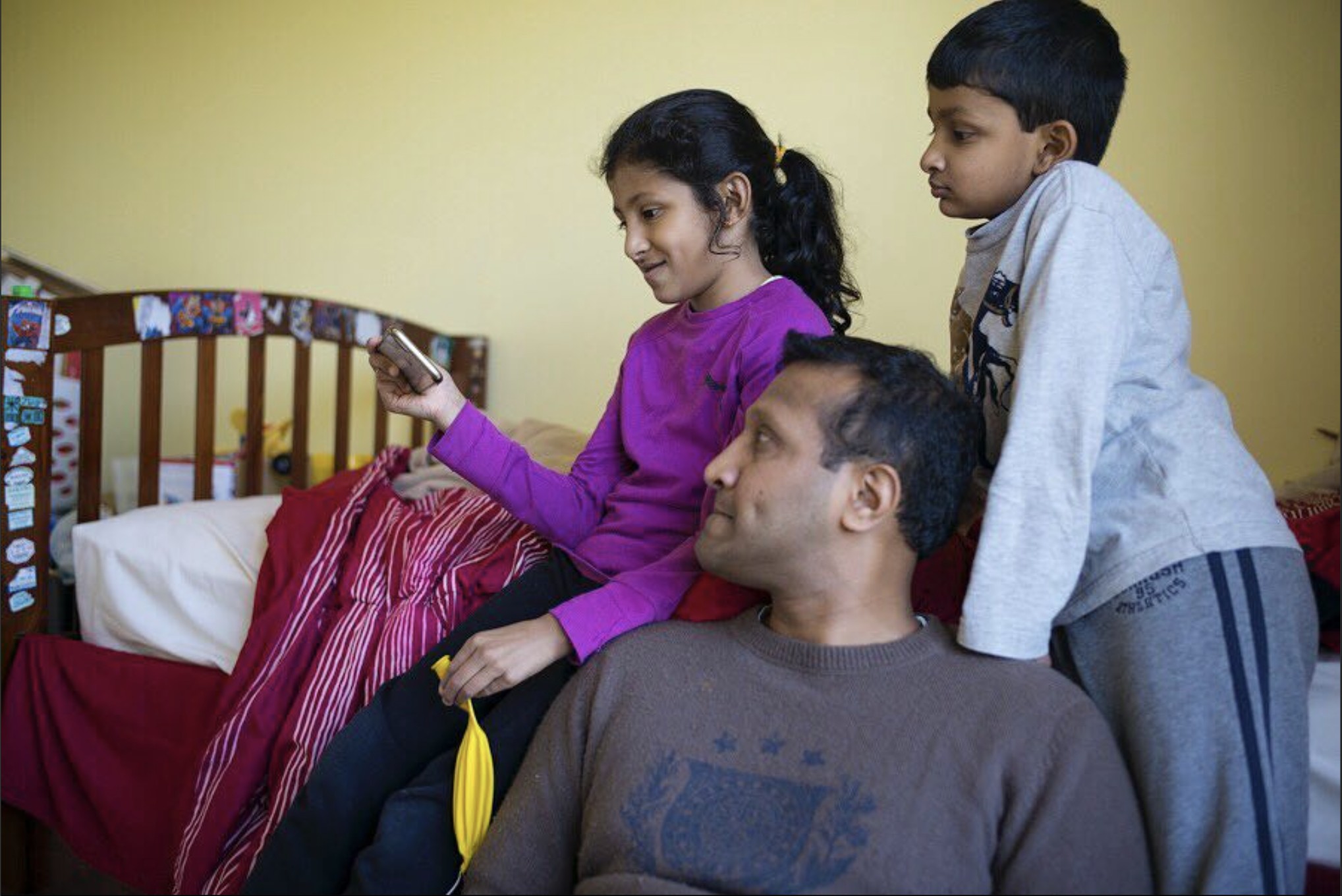
Before visits became routine, there was the weekly call. In 2017, Ajay and the children gathered for a video call with my parents in Mumbai. Our Boston rooms would reorient themselves around a small rectangle of screenlight. It wasn’t dramatic—just consistent. A practice that said: we are still here, we are still together, even across time zones.
Closets and Walls
A framed portrait is a declaration. A closet is something else: accidental truth. The overflow. The seasons. The things kept “just in case.” Closets hold versions of the self that aren’t meant for public display.
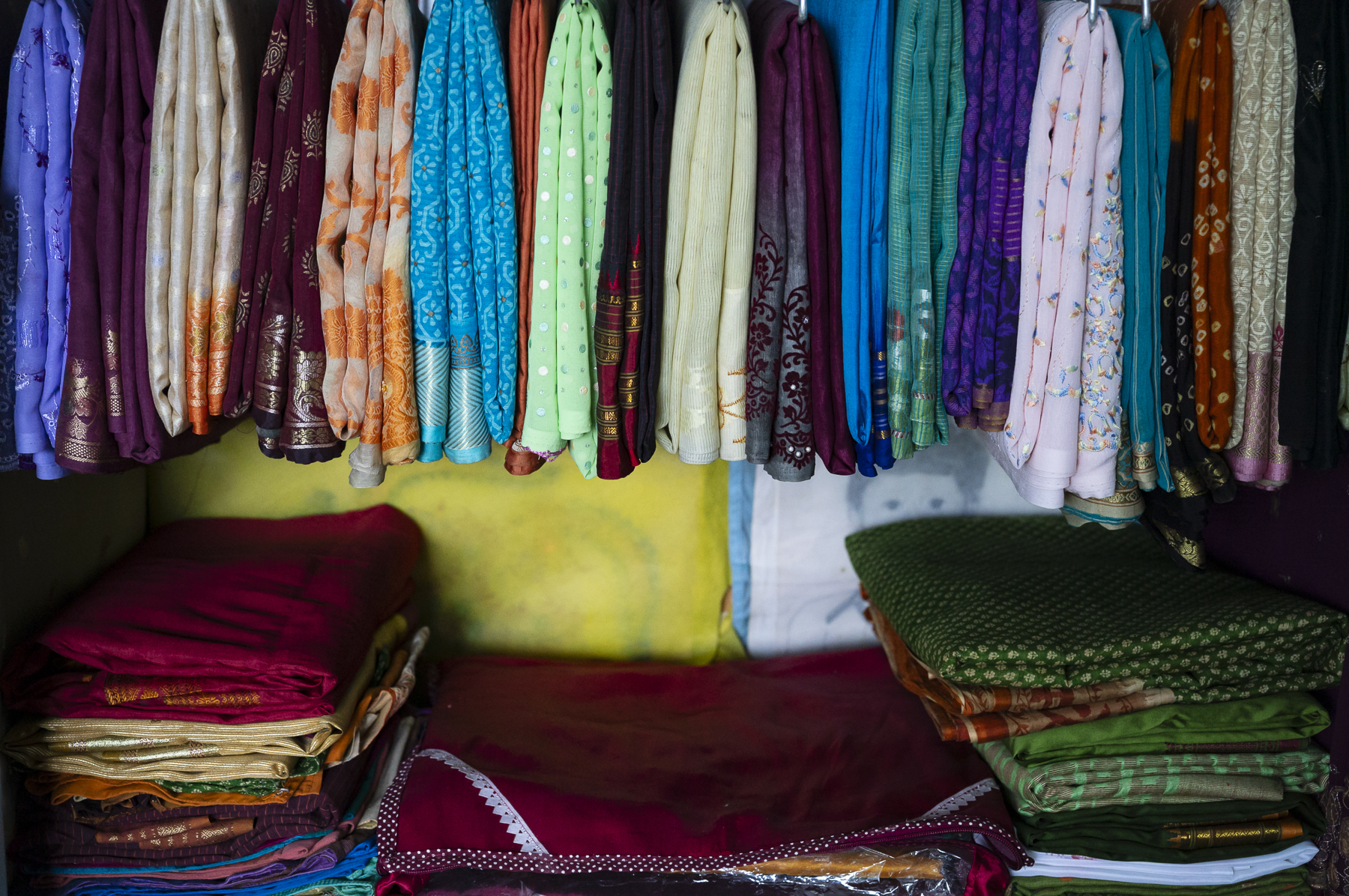
In my mother’s closet in Mumbai, saris hang like bright chapters. Tucked behind them is a sketch of Ajay—drawn years ago by one of his college friends. It isn’t displayed or curated. It’s simply kept, its presence almost hidden.
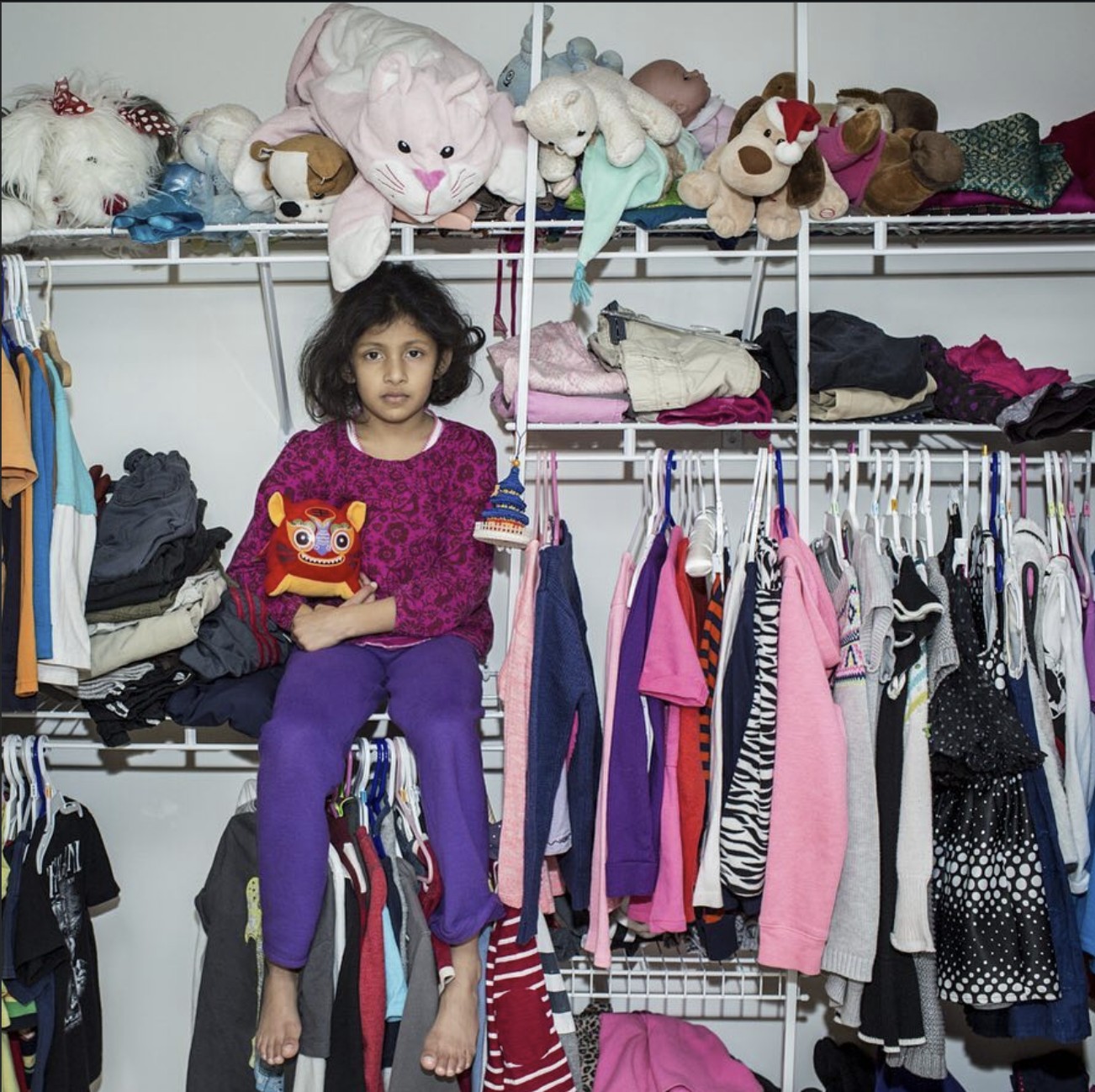
In Boston, there is another closet—Kriti’s childhood closet—where she once sat surrounded by hanging clothes and soft toys, holding a stuffed animal as something dear. Two closets, two continents, two generations: one storing the trace of a grown son; the other holding a child’s small kingdom. Between them is a shared instinct—our need to keep certain things close, even when we don’t know how to speak about them.
Walls do this work too.
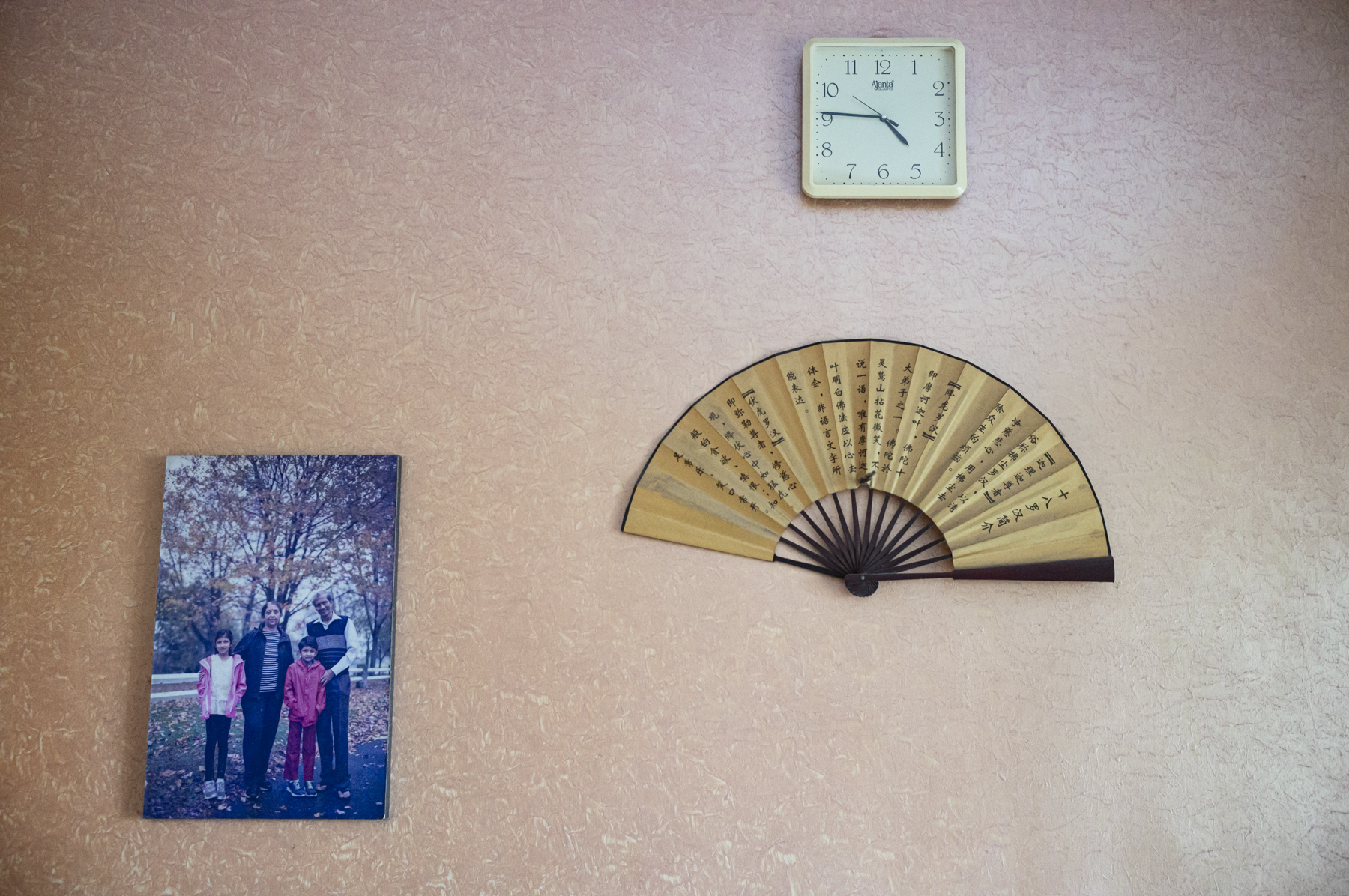
On Sharda’s bedroom wall in Mumbai, time is kept in three ways: a clock measuring the day, a family photograph from 2016, and a Chinese fan Ajay brought for her from China in 2010. Ajay isn’t in the room, but his gesture is. The wall becomes an archive without calling itself one.
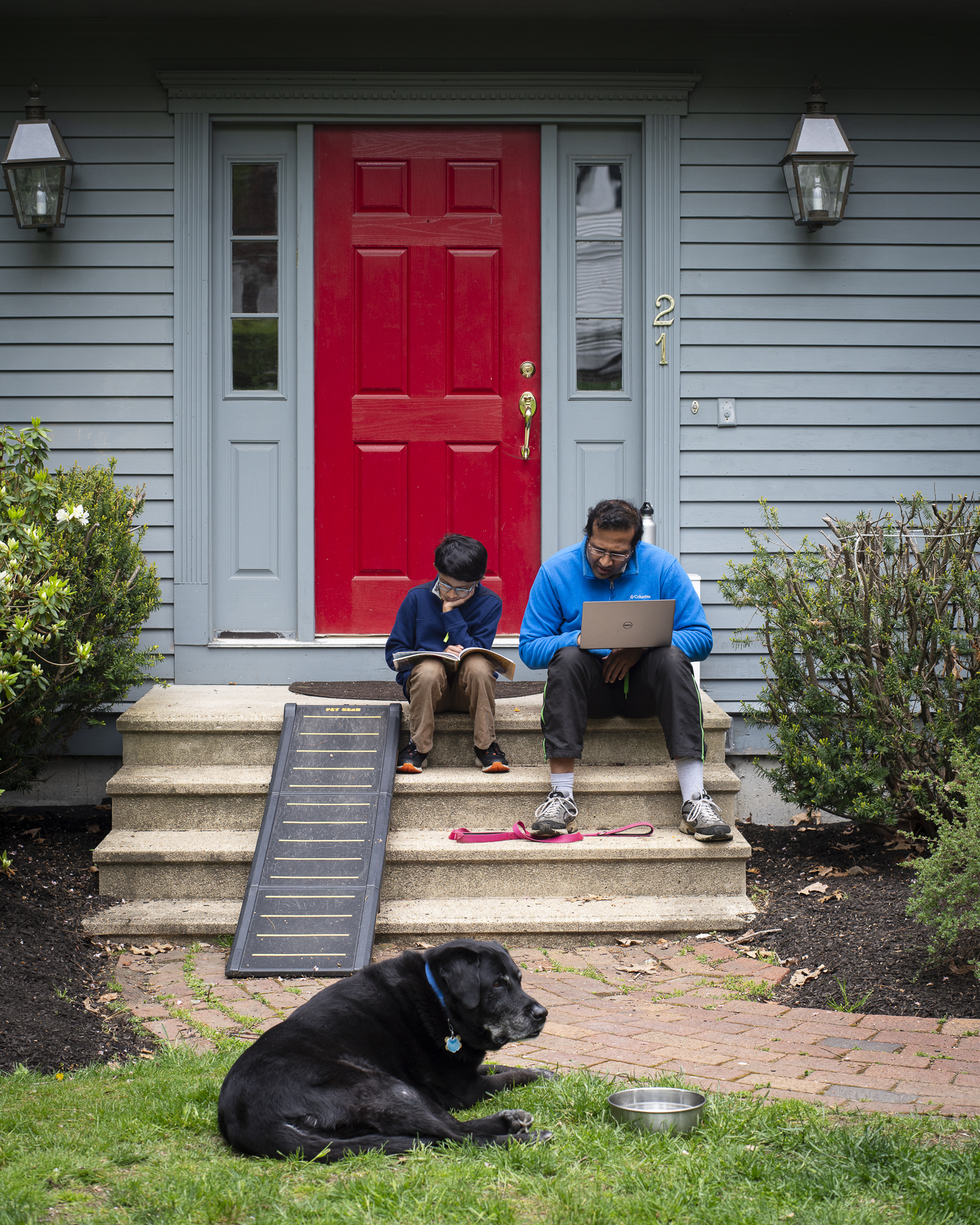
In 2020, the world narrowed and the house began to feel too small. Ajay and Neel took their laptop and a book out to the front steps—work and homework side by side—just to sit in air that wasn’t indoors. Bella followed, as she always did, and settled near them as if this, too, were part of the schedule. Nothing about it was dramatic. That’s why I photographed it.
Marking Growth
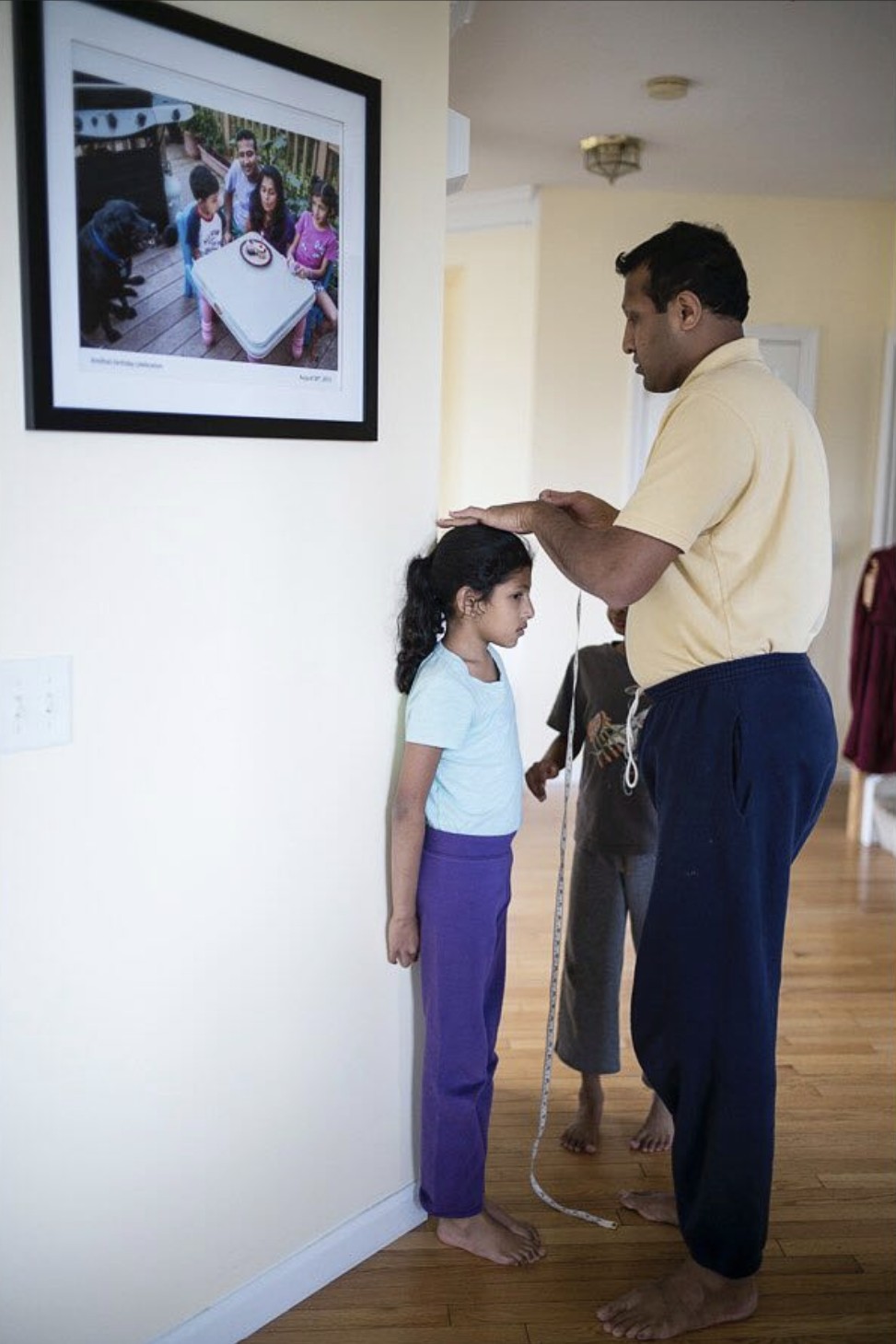
Some families keep time with calendars. Others keep it on walls. It can look almost comedic from the outside—children lined up, a father checking a measurement—but it is a form of care. It says: I see you changing. I am paying attention. I want evidence that you were once this small.
The wall, again, becomes an archive. The family teaches itself what to value: not perfection, not performance—attention.
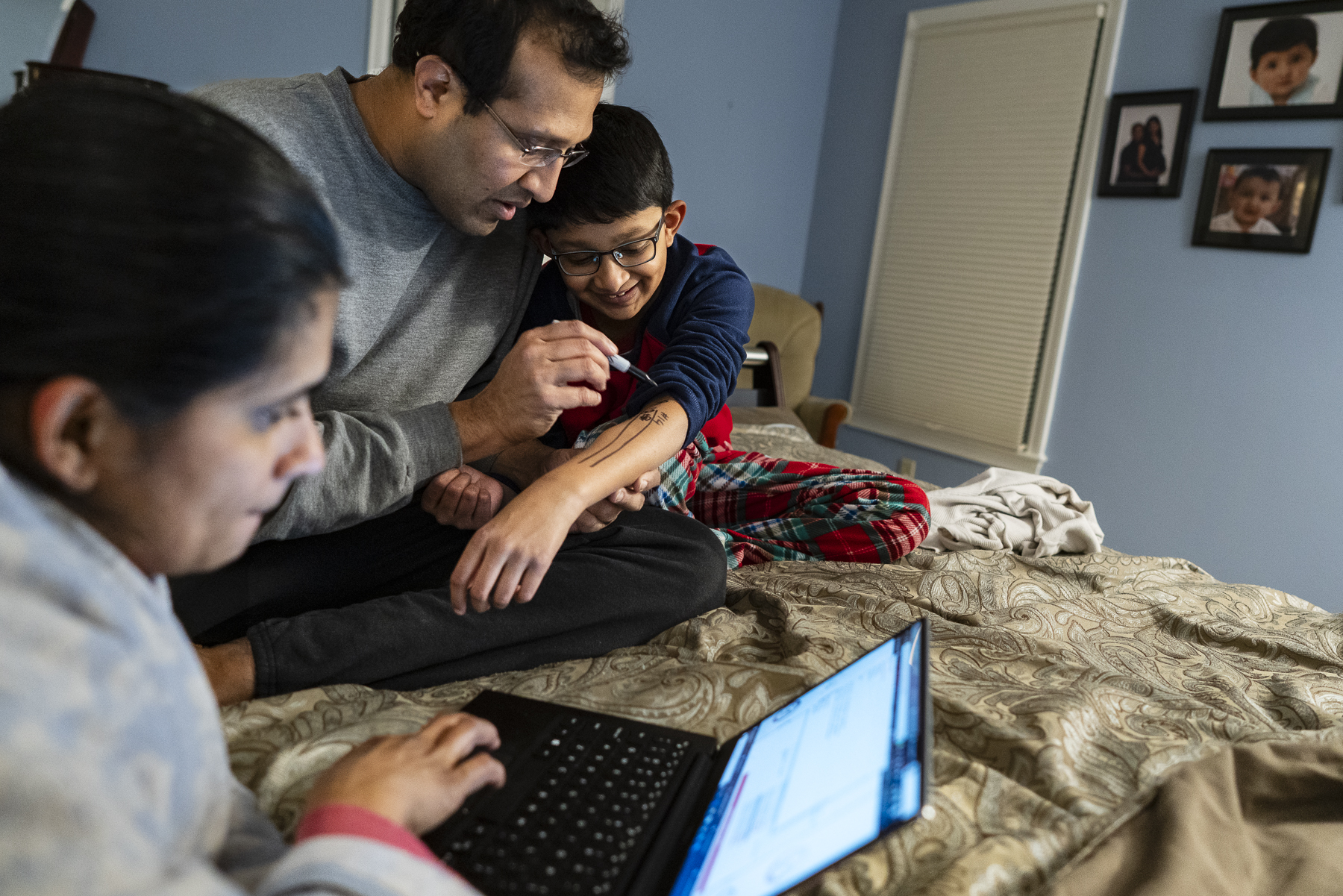
And before meets, Ajay wrote the swim schedule on Neel’s arm—lanes, times, reminders—so nothing could be misplaced. The kids treated it like a charm.
The Wish Returning as Gesture
Sharda always wanted a daughter. That longing was never tragic or loud; it was simply there, a quiet wish that hovered over the household. When Ajay and I were small, she would dress him in a frock now and then—playfully, briefly borrowing that wish from reality. Decades later, when Ajay had a daughter, the wish didn’t arrive as speeches or proclamations. It returned as everyday intimacy.
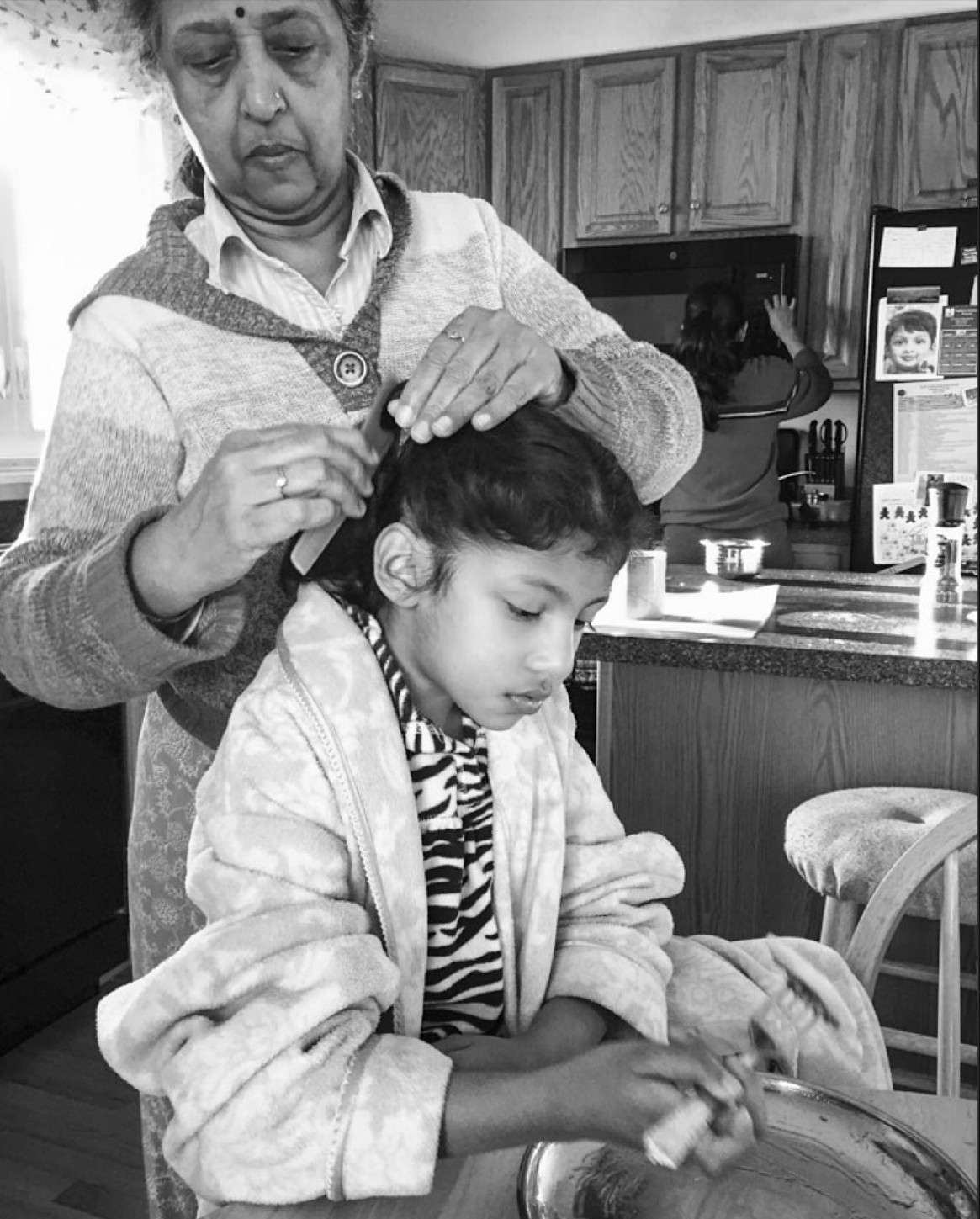
Sharda never misses an opportunity to braid Kriti’s hair. In the Boston kitchen, Sharda’s hands parting, smoothing, gathering; Kriti sitting still, receiving care in the most ordinary way. These are the small “girly” intimacies Sharda once imagined. They arrive not as destiny fulfilled, but as love finding a practical form.
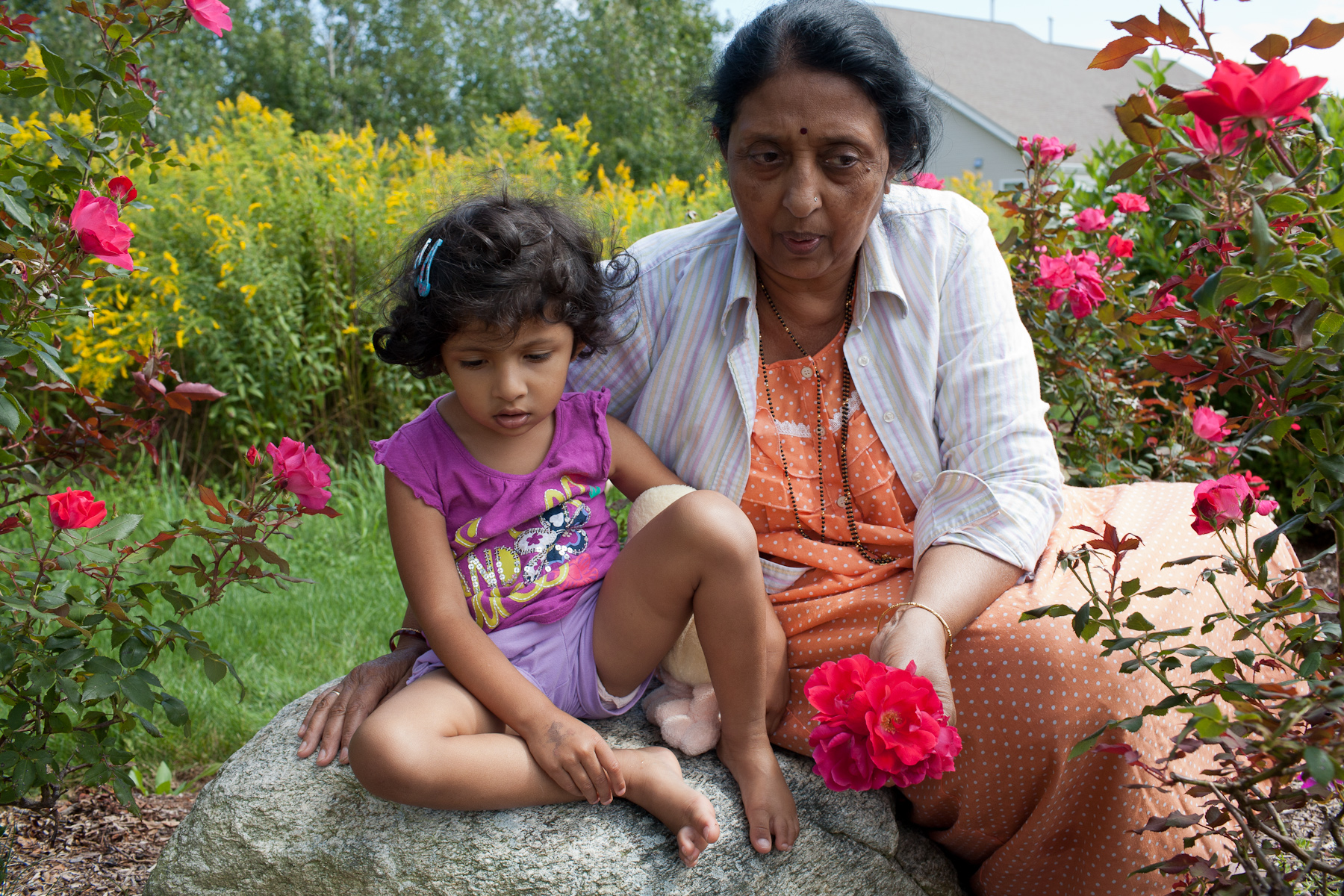
In 2011, Sharda and Kriti sit among roses in Boston, picking flowers. Kriti listens as her grandmother tells stories from her childhood in India—stories traveling not through books or screens, but through voice and attention. Care becomes inheritance.
Family Lore
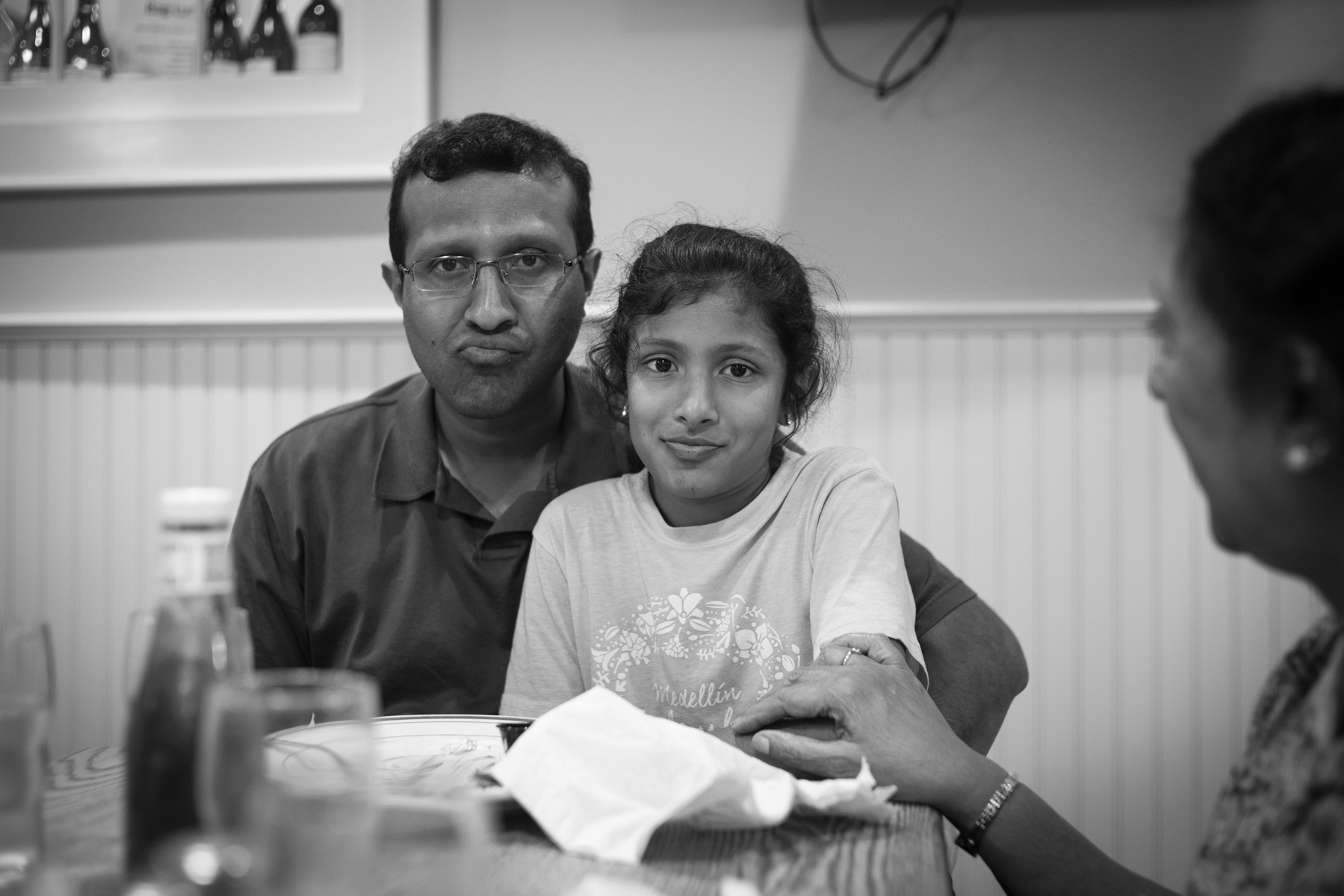
Some inheritances arrive as expressions. In our language we call it paap tondah—an “innocent face.” When Ajay was little, Sharda would tell him to make that face. He was mischievous and often in trouble, and the expression was part performance, part rescue—his way out.
Years later, it returned as play. In 2018, at a beach restaurant along the New England coastline, Sharda asked Kriti to make paap tondah. It wasn’t needed for the same reason. It had simply become family lore. Kriti tried it. Ajay tried it too. Sharda watched with care—amused, attentive, delighted. A private myth—kept alive by repetition.
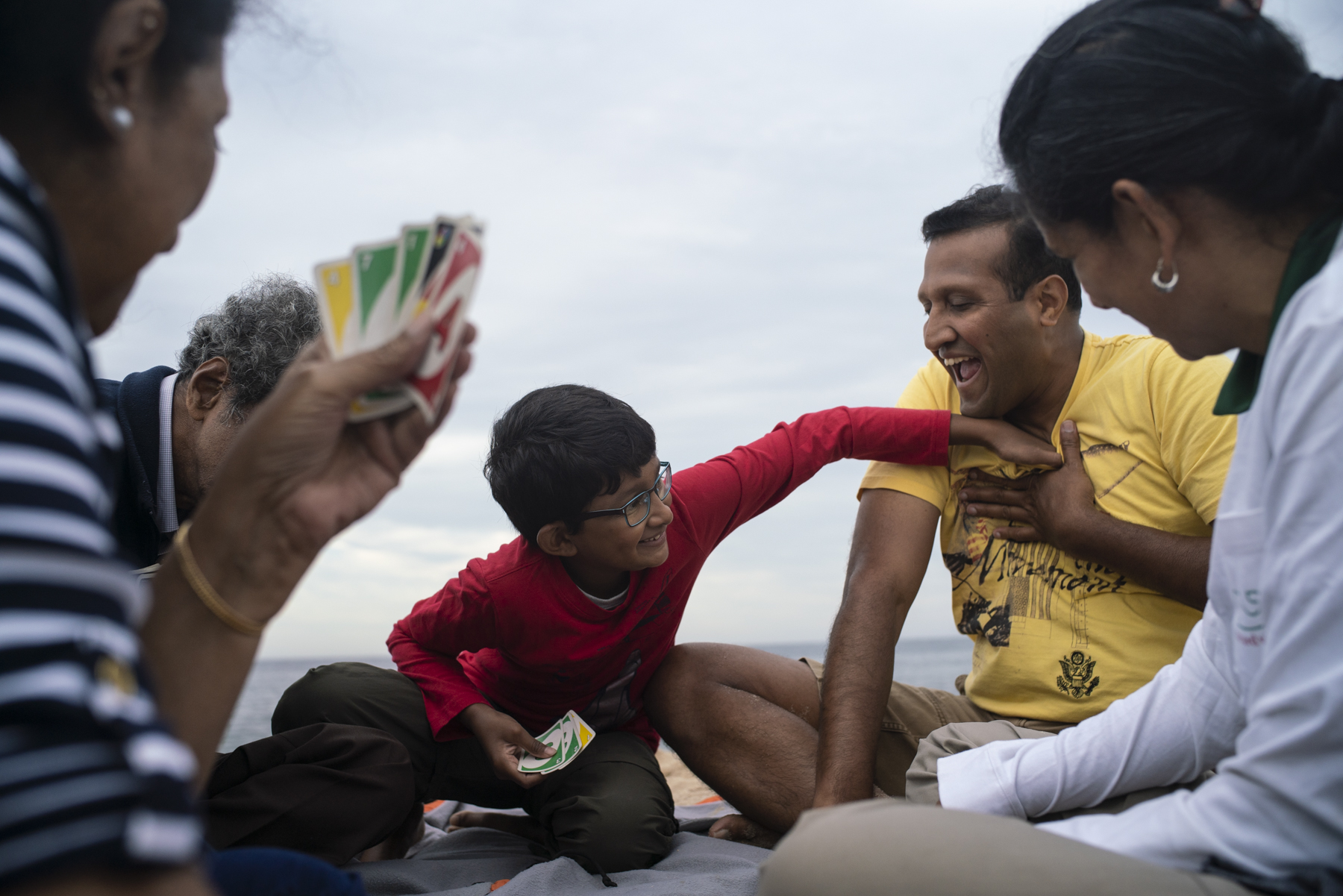
Cards were a family ritual too, and Ajay was famously bad at being honest about them. Neel caught him mid-game—certain there were cards hidden under Ajay’s shirt. It’s the kind of accusation that becomes a story the moment it’s spoken.
2021
I regret what I didn’t photograph. The toys and clothes Kriti and Neel outgrew—the evidence of a childhood leaving quietly. And when Kriti began driving in 2024, I wasn’t there. Ajay would have been proud of her. Some milestones happen without the witness who wants most to hold them.
A few months before Ajay died, I photographed him at home with Bella. If you look closely, there’s an IV patch on his right hand. It’s small—easy to miss. Bella is there, steady, always by his side. After Ajay passed, Bella followed within months. Both were gone in 2021.
I didn’t make that photograph because I knew. I made it because this is what love looks like most of the time: keeping company.
Loss can rearrange your relationship to tradition. Things you once mocked begin to look like tools. That is what happened to me with a ritual my parents have practiced for years.
At my mother’s kitchen window in Mumbai, my father places a small bowl of food for the crows. I used to find it silly—one of those inherited customs performed out of habit, not belief. After Ajay’s passing, I stopped dismissing it.
As soon as my father sets the bowl down, within two or three seconds a crow arrives. It doesn’t eat right away. It sits and calls out—my father says it is calling its friends for the meal. Sometimes, while my mother is still cooking, a crow will come early and caw at the window as if to ask, Where is it? My father answers without irony. “A few minutes,” he tells it, and the bird flies off as if it understands.
Feeding crows is a way of feeding ancestors—an offering meant for those who are no longer here, carried outward on wings. I don’t know what any of it “means” in a provable way. I only know what it does. It turns the window into a threshold, and grief into a ritual you can perform with your hands.
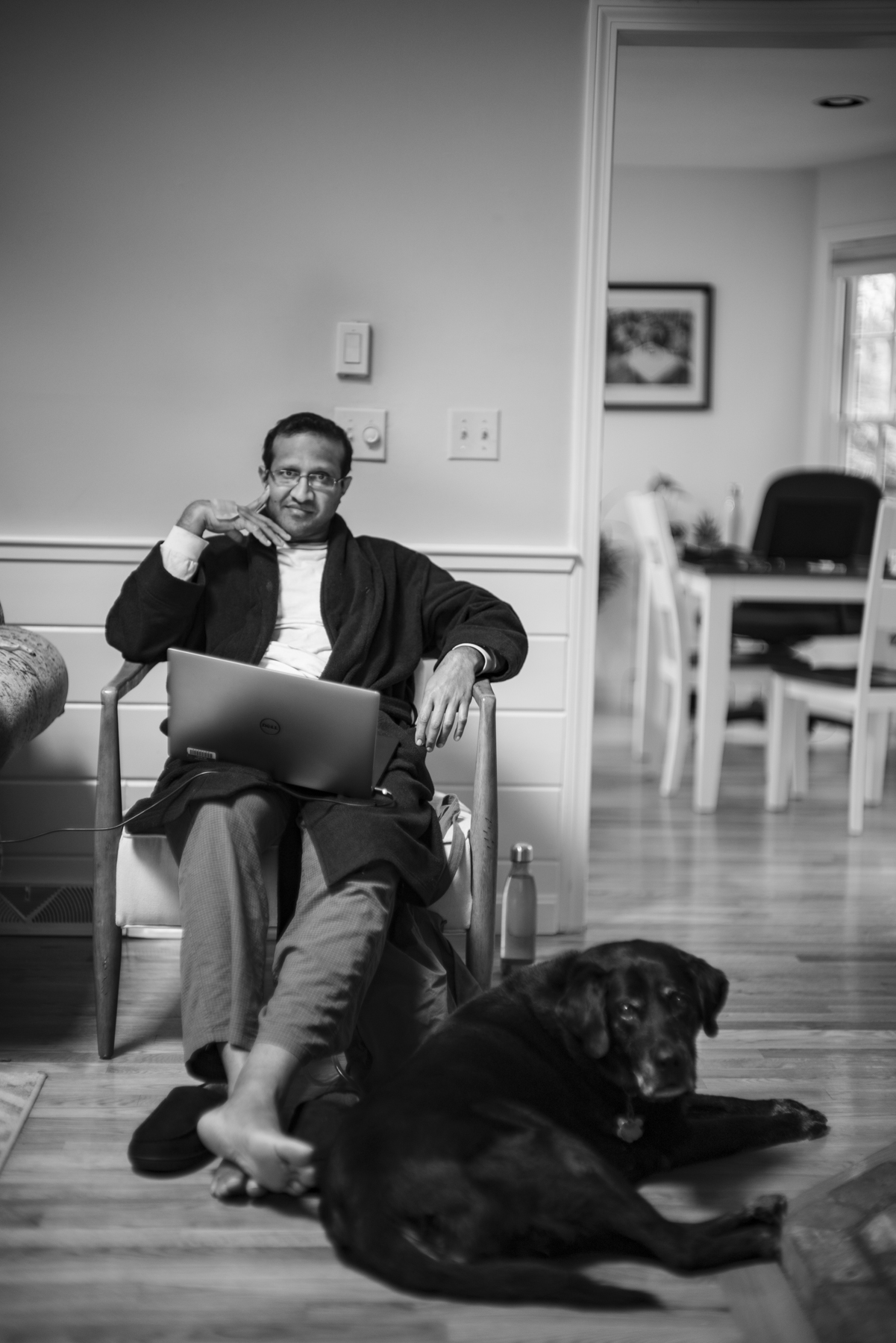
Ajay + Bella — Boston, 2021
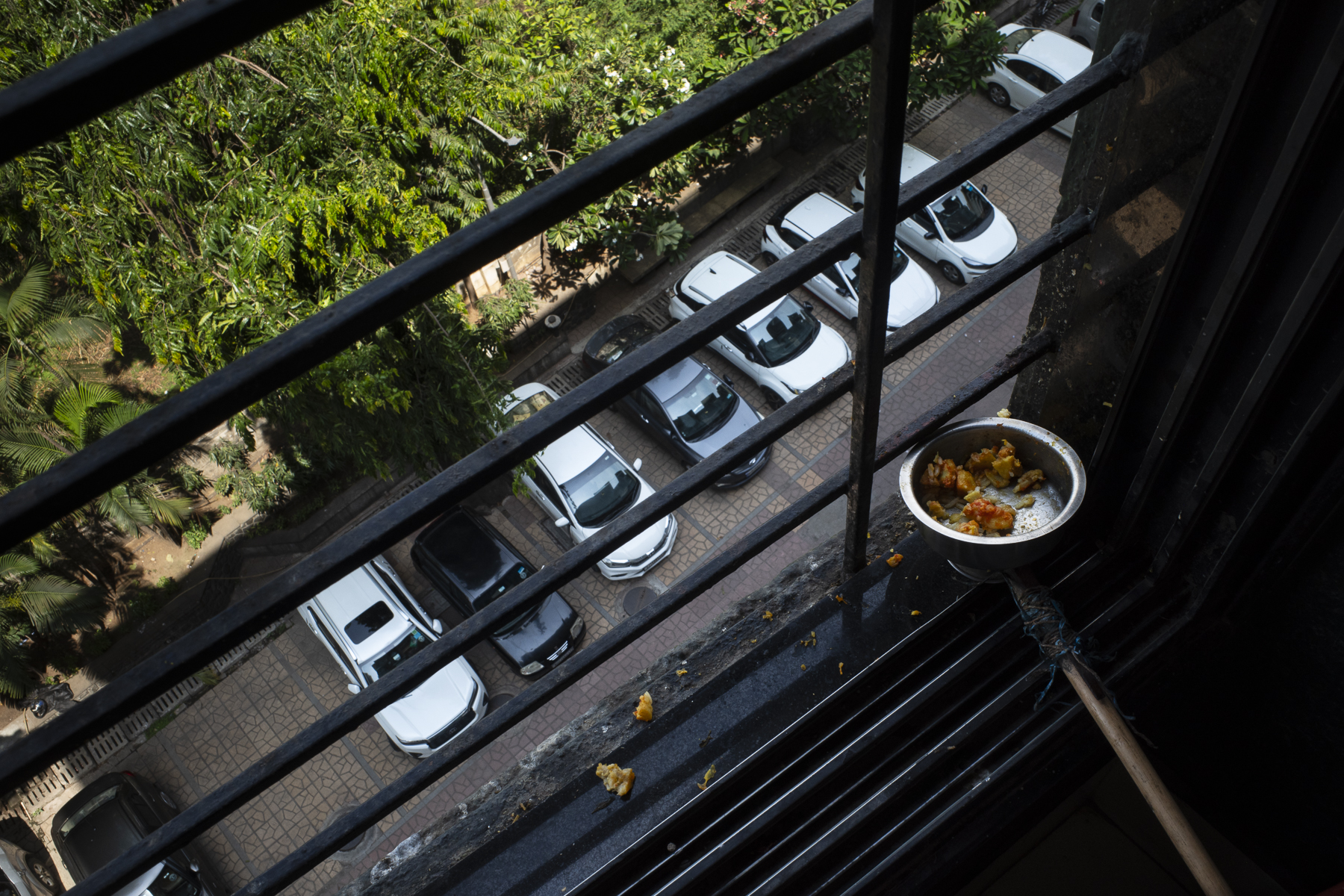
Mumbai, 2024
Continuity, Not Closure
This is not an essay about resolving loss. It is an essay about how families continue.
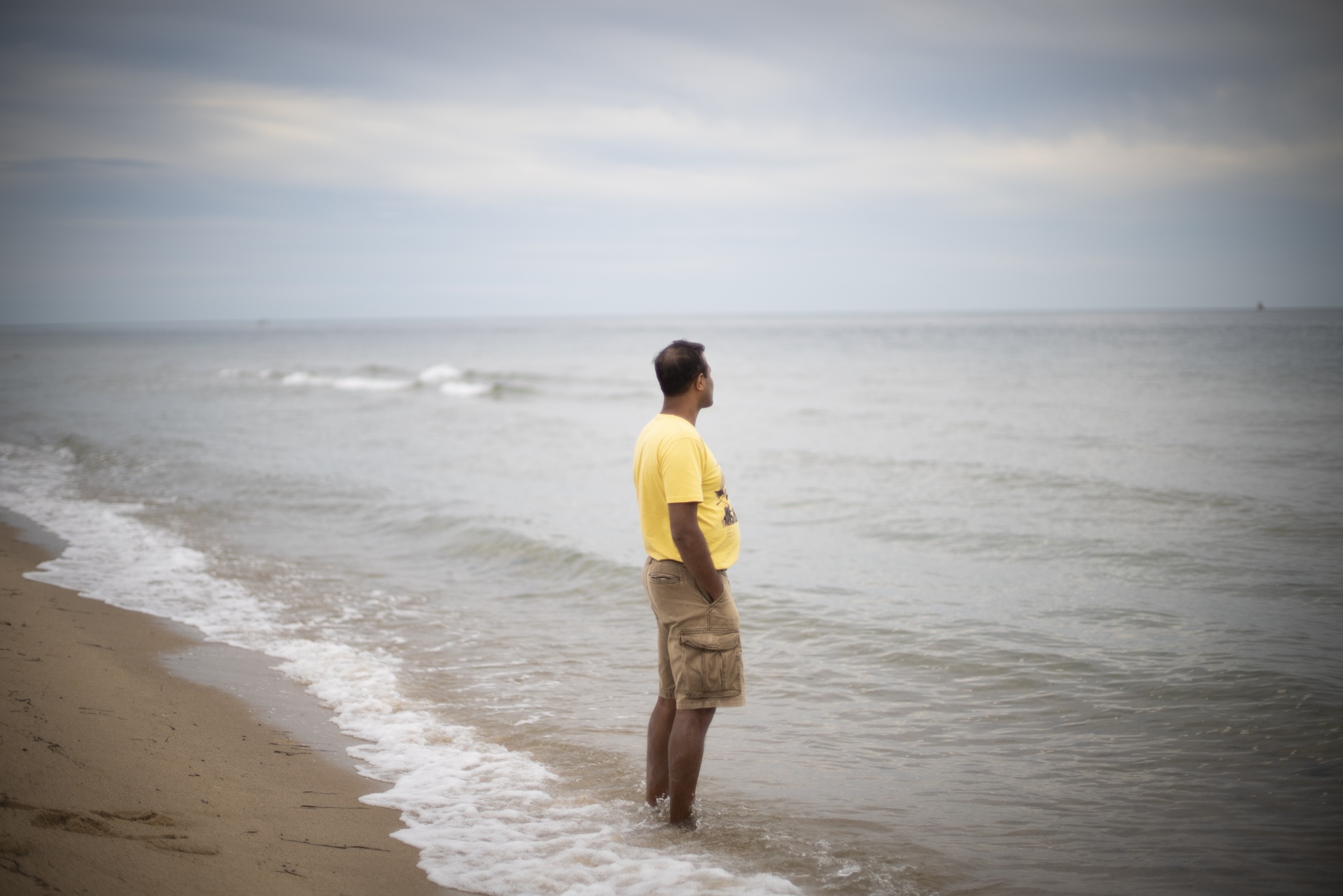
Ajay at the beach in 2018—standing at the edge of the water, looking out—reminds me that even inside a family trip there are private moments, interior weather. A photograph like that doesn’t explain anything. It doesn’t need to. It simply holds a pause.
Kriti in 2024, in her lifeguard shirt, holds a different kind of threshold: a young woman stepping into responsibility, into her own life. Ajay would have been proud.
And that is where the witness must be careful.
To document your family is not to own them. It is to pay attention—to the rituals that keep a bond alive, to the objects that hold memory without words, to the jokes and gestures that become inheritance, to the way distance forces love to adapt, to the symbolism that appears at a kitchen window when grief arrives.
Photographs don’t have to explain everything. They can leave space. They can hold what remains. They can show how a family continues—not in grand declarations, but in the quiet repetitions that make a life.
Between generations, between cities, between the living and the departed, our story lives in these small rituals.
And I am here, still watching.
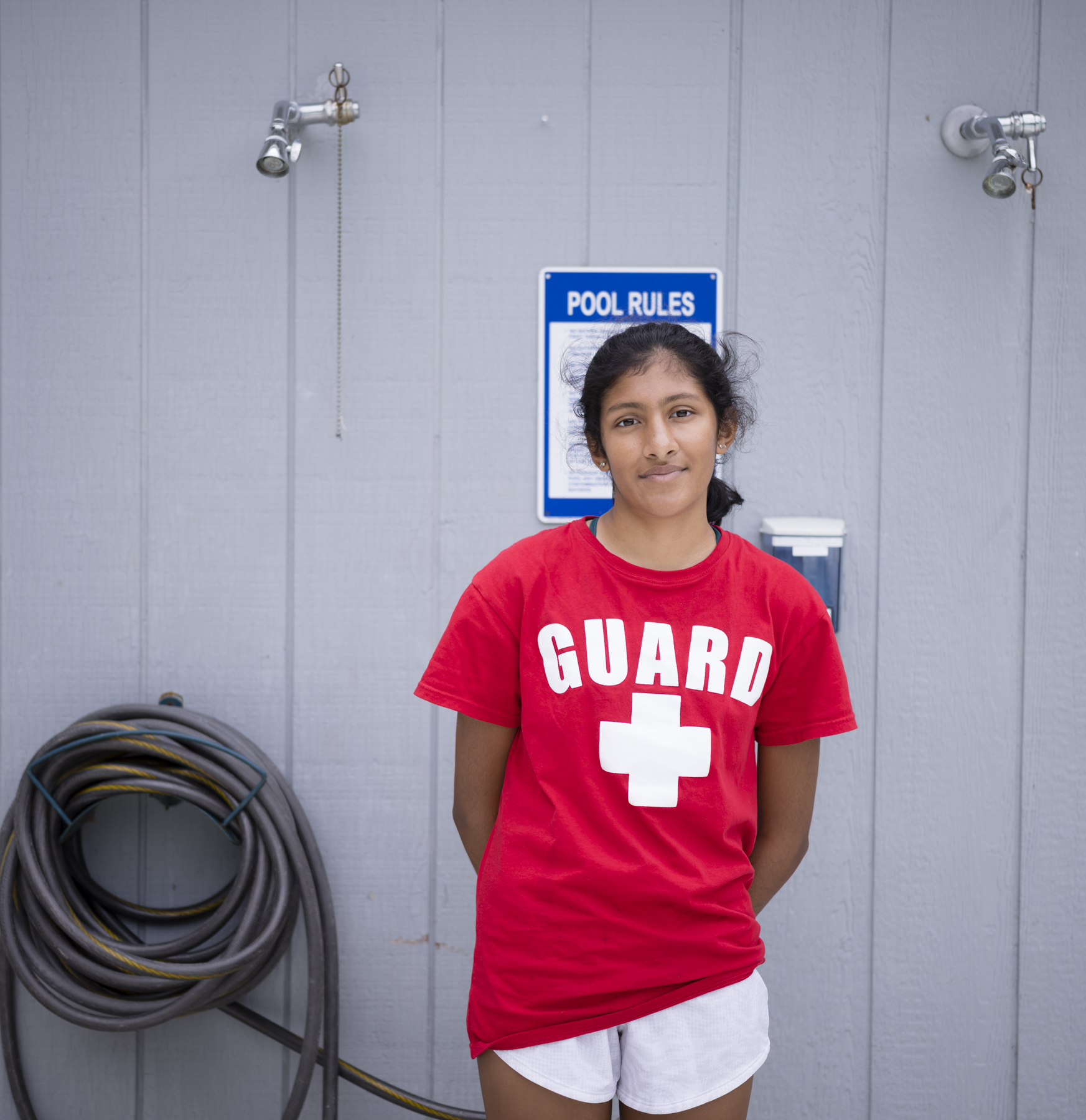
Kriti — Boston, 2024
Image Index
- 01 — Sharda / Ajay / Kriti — 1952 / 1978 / 2011
- 02a — Amitha + Kriti — Boston, 2011
- 02b — Kriti + Bella — Boston, 2011
- 03a — Sharda — Mumbai, 2024
- 03b — Kriti — Boston, 2023
- 04a — Sharda’s closet — Mumbai, 2024
- 04b — Kriti’s closet — Boston, 2011
- 05 — Bedroom wall — Mumbai, 2024
- 06 — Calling home — Boston ↔ Mumbai, 2017
- 07 — Front steps — Boston, 2020
- 08 — Marking growth — Boston, 2015
- 09 — Swim meet ritual — Boston, 2020
- 10a — Braiding — Boston, 2015
- 10b — Garden — Boston, 2011
- 11 — Paap tondah — New England coast, 2018
- 12 — Uno — beach, 2018
- 13 — Ajay + Bella — Boston, 2021
- 14 — Window offering — Mumbai, 2024
- 15 — Ajay at the beach — 2018
- 16 — Kriti lifeguard — Boston, 2024
Leave a reflection
What stayed with you after reading? We welcome thoughtful, respectful responses.